


What's Happening?
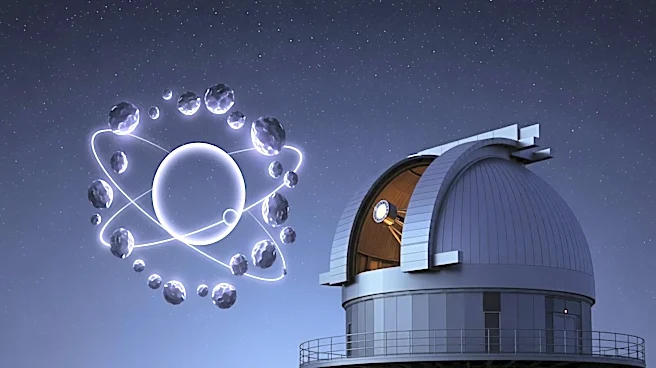
Astronomers at the Vera C. Rubin Observatory have detected over 11,000 new asteroids, including 33 previously unknown near-Earth objects (NEOs). This discovery was made through a million observations submitted to the International Astronomical Union’s
Minor Planet Center. The NEOs are asteroids whose orbits bring them close to Earth, but none pose a threat. The largest of these newly discovered NEOs is around 1,640 feet wide. The observatory's efforts are part of a larger initiative to reshape the inventory of the Solar System and enhance planetary defense capabilities.
Why It's Important?
The discovery of new asteroids, particularly near-Earth objects, is crucial for planetary defense and understanding the Solar System's dynamics. Identifying and monitoring these objects can help prevent potential impacts and mitigate risks to Earth. The Rubin Observatory's work represents a significant advancement in asteroid detection, enabling early detection and continuous monitoring. This initiative is expected to uncover thousands more NEOs, some of which may be potentially hazardous, thereby enhancing global preparedness for asteroid threats.
What's Next?
The Rubin Observatory will continue its efforts to discover and monitor asteroids, with the goal of identifying around 90,000 new NEOs. This ongoing research will contribute to planetary defense strategies and provide valuable data for future space missions. The observatory's findings will be shared with international scientific communities to support collaborative efforts in asteroid tracking and impact prevention.