





What's Happening?
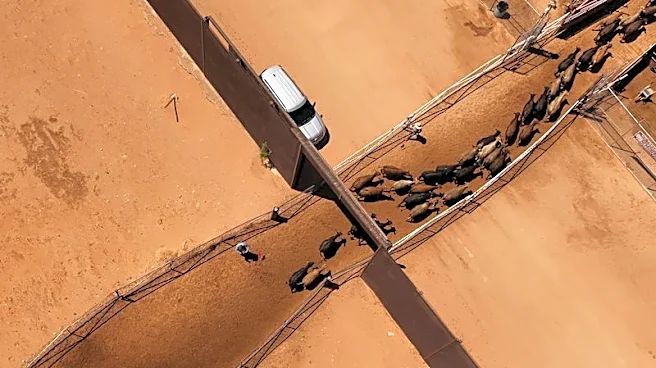
The U.S. Department of Agriculture (USDA) has announced plans to resume cattle imports from Mexico starting August 24, 2026, despite ongoing concerns about the New World screwworm outbreak. The decision comes after the screwworm was detected in the U.S. earlier
this summer, marking the first confirmed cases in decades. The USDA plans a phased reopening of cattle ports, beginning with Douglas, Arizona, and later expanding to New Mexico. Each animal will undergo inspection to ensure it is free of screwworm. The USDA's efforts include releasing sterilized male screwworms to curb the population, a method previously successful in the 1960s. However, Texas agriculture leaders express concerns that the USDA's response has been insufficient, urging for more robust measures to protect the livestock industry.
Why It's Important?
The resumption of cattle imports is significant for the U.S. beef industry, which has faced fluctuating prices due to the screwworm outbreak. The USDA's decision aims to stabilize beef prices by increasing supply. However, the potential risk of further screwworm infections poses a threat to the livestock industry, particularly in Texas, which has been heavily impacted. The USDA's strategy of using sterilized flies is a critical component of their eradication efforts, but local leaders argue that more proactive measures are needed. The outcome of these efforts will have economic implications for cattle producers and could influence future agricultural policies regarding pest control and import regulations.
What's Next?
The USDA will monitor the situation closely, adjusting the reopening timeline based on Mexico's progress in controlling the screwworm outbreak. Mexican President Claudia Sheinbaum has committed to accelerating efforts to meet the USDA's requirements. The success of the sterilized fly program will be crucial in determining the long-term viability of cattle imports. Texas officials, including Agriculture Commissioner Sid Miller, emphasize the need for sustained federal support to prevent future disruptions. The USDA's actions will likely be scrutinized by industry stakeholders, who are keen to see effective measures that protect both the economy and livestock health.