
What's Happening?
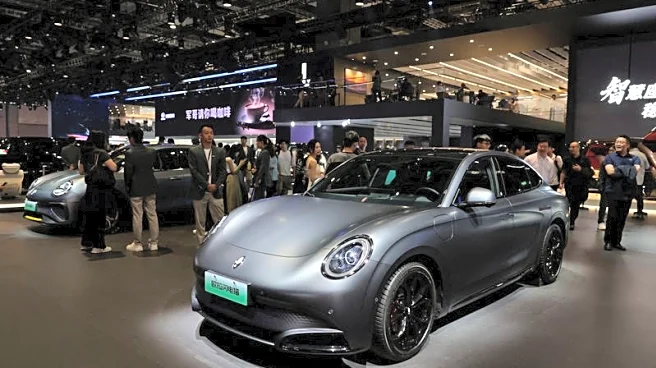
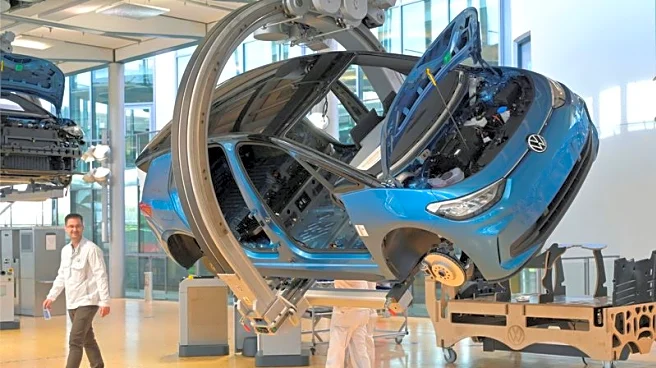
China's Ministry of Commerce has approved individual negotiations between Chinese automakers and the European Union regarding electric vehicle (EV) imports. This decision follows Volkswagen Anhui's successful negotiation for a duty-free rate on its Cupra
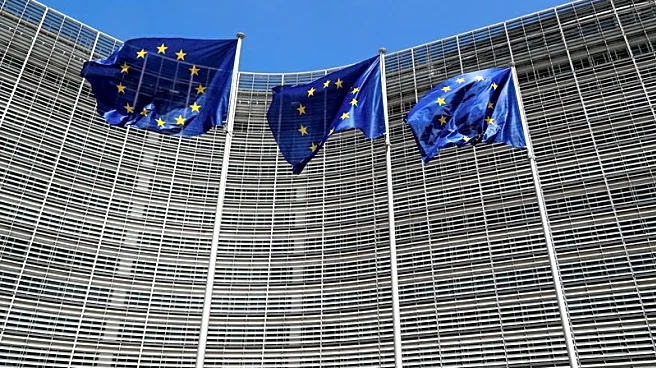
Tavascan SUV. The move marks a shift in China's stance, previously against separate talks, and aims to facilitate agreements on price commitments. The European Commission's approval of Volkswagen Anhui's request sets a precedent for other Chinese automakers to seek similar exemptions, potentially altering the competitive landscape for EVs in Europe.
Why It's Important?
This development is significant for the global automotive industry, particularly in the context of the growing EV market. By allowing individual negotiations, China is opening pathways for its automakers to better compete in the European market, which is crucial for expanding their global footprint. The decision also reflects the strategic importance of the EV sector in international trade relations, as countries navigate tariffs and market access. For the EU, this could lead to increased competition and innovation in the EV market, benefiting consumers with more choices and potentially lower prices.
What's Next?
As more Chinese automakers consider submitting their own price undertaking proposals, the EU may see a wave of negotiations that could reshape its EV market. The success of these negotiations will depend on the ability of Chinese companies to meet EU standards and price commitments. This could also prompt European automakers to enhance their competitive strategies, potentially leading to increased investments in EV technology and infrastructure.