


What's Happening?
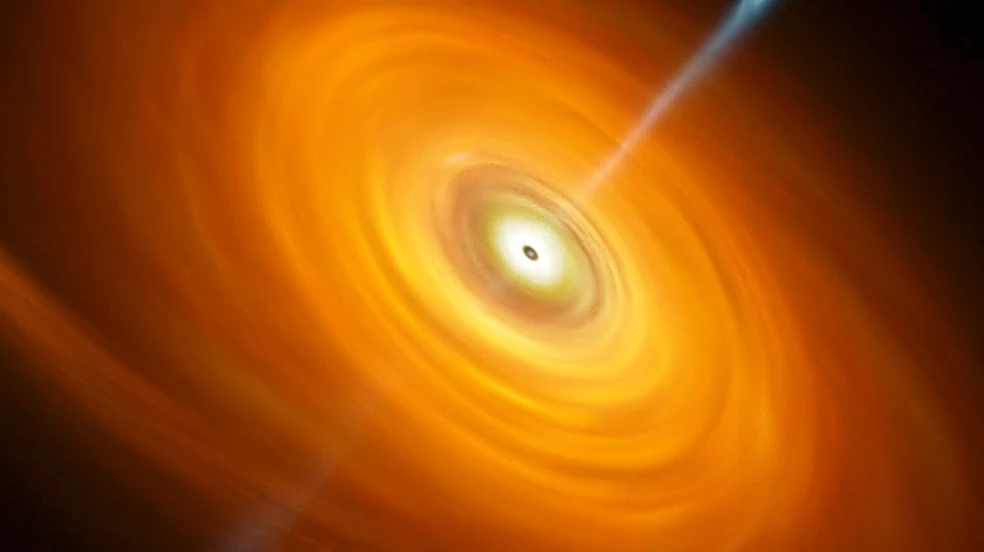
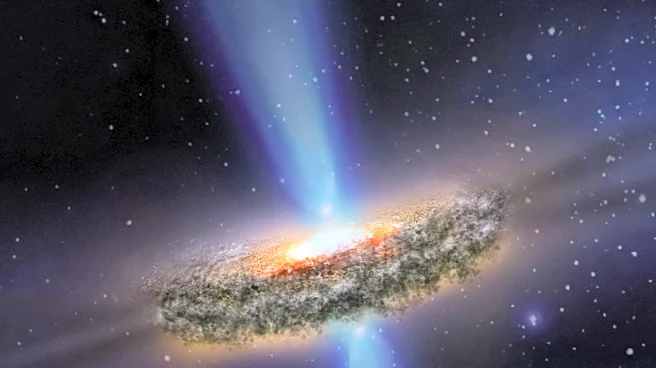
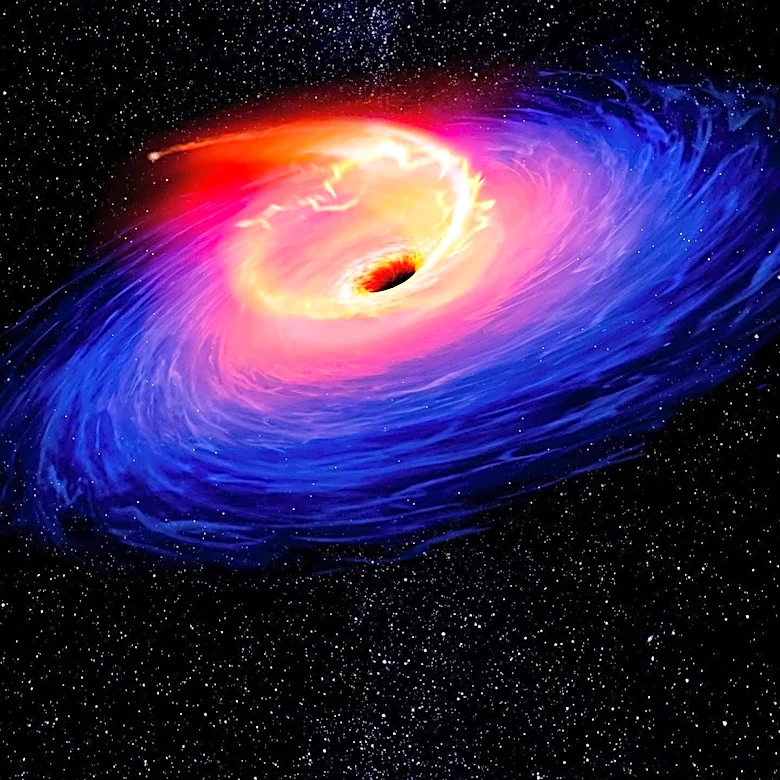
Researchers at Eötvös Loránd University (ELTE) have found statistical evidence suggesting that supermassive black holes (SMBHs) can be ejected from the centers of galaxies. By analyzing data from approximately 100,000 quasars, which are exceptionally
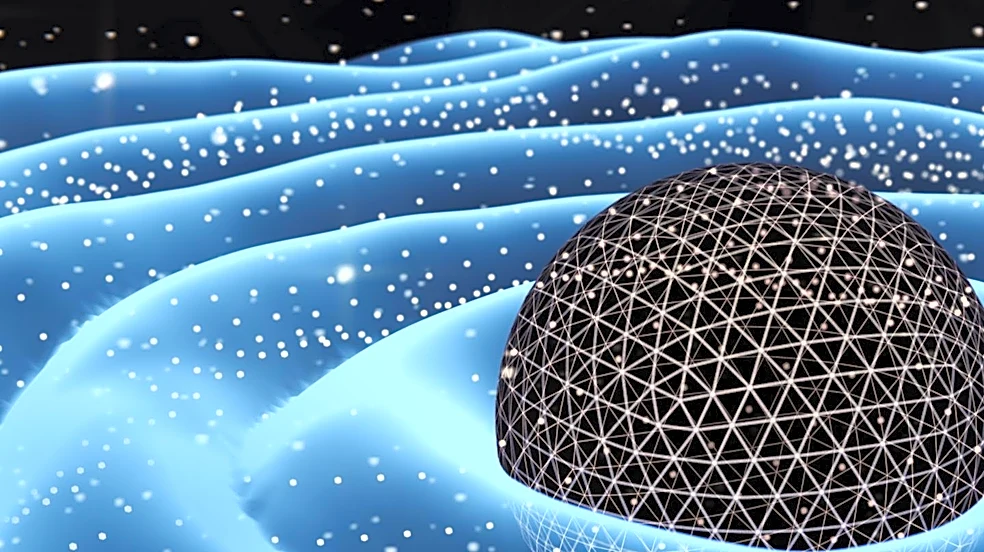
bright galactic nuclei powered by active SMBHs, the team identified a correlation between the black hole's velocity and the amount of dust obscuring the quasar. This relationship was predicted ten years ago by members of the same research group. The study found that quasars containing faster-moving black holes are, on average, redder due to greater dust obscuration. This observation supports the theory that when two galaxies merge, their central black holes also merge, and the resulting powerful gravitational waves can impart a 'kick' that displaces the new, larger black hole from the galactic center. If the kick is not strong enough to eject it entirely, the black hole oscillates around the galactic nucleus.
Why It's Important?
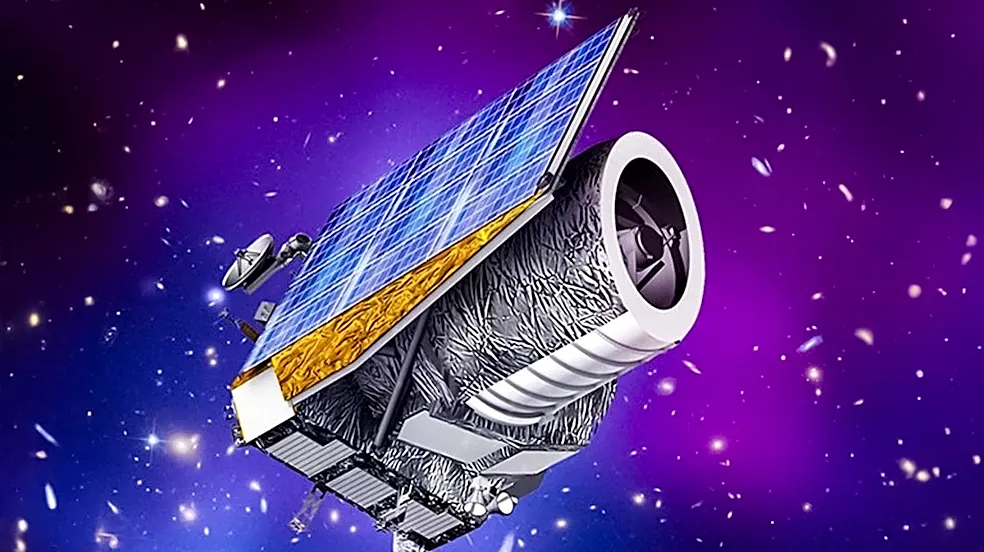
This study provides the first statistical evidence supporting a phenomenon predicted by general relativity but not yet conclusively confirmed: the recoil of supermassive black holes after galactic mergers. Understanding this process is crucial for comprehending the dynamics of galactic evolution and the role of gravitational waves. The findings suggest that such merger events are common, with potentially half of the studied quasars having experienced a recent black hole merger. This has significant implications for future gravitational-wave astronomy, particularly for missions like the European Space Agency's LISA (Laser Interferometer Space Antenna), scheduled for launch in 2035. LISA will directly detect gravitational waves from supermassive black hole mergers, and this research helps lay the groundwork for interpreting those signals, including how often these mergers occur and the environments surrounding them.
What's Next?
Further observations and more detailed models are needed to confirm the interpretation of these findings and to rule out other potential physical processes. If confirmed, this method could be used to investigate the frequency of supermassive black hole mergers, the speeds at which they are ejected, and the characteristics of their surrounding environments. The research directly contributes to preparations for the LISA mission, as ELTE researchers have been involved in its scientific planning since 2006. A new framework, the Kármán Tódor National Laboratory for Space Science, will be established at ELTE to continue this work, focusing on developing waveform models to extract information about black hole masses, distances, and evolution from LISA's future signals. This ongoing research aims to definitively answer questions about displaced black holes within the next decade.
Beyond the Headlines
The statistical approach used in this study represents a significant shift from searching for individual, unusual objects to identifying population-wide signatures. This methodology could be applied to other astrophysical phenomena where individual detection is challenging but statistical patterns are discernible. The confirmation of black hole recoil would not only validate a key prediction of general relativity but also provide a deeper understanding of the interplay between spacetime, gravity, and matter on cosmic scales. The oscillation of displaced black holes within galactic nuclei could also influence the distribution of gas and stars in those regions, potentially affecting star formation rates and the overall structure of galaxies. This research highlights the interconnectedness of various astrophysical processes, from galaxy mergers to gravitational wave emissions and the evolution of supermassive black holes.