


What's Happening?
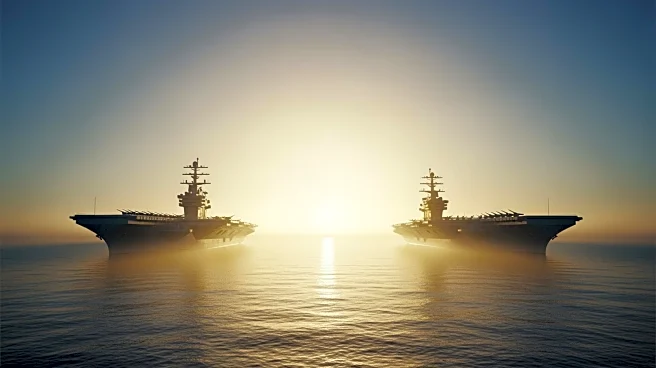
The United States is deploying the USS Gerald R. Ford, the world's largest aircraft carrier, to the Middle East to bolster its military presence in the region. This move comes as tensions with Iran remain high, following President Trump's recent suggestion
of potential negotiations with Iran over its nuclear program. However, these talks have not materialized, and Iran continues to face internal unrest due to a crackdown on protests. The deployment of the USS Ford, alongside the USS Abraham Lincoln already stationed in the Arabian Sea, aims to increase pressure on Iran. This decision follows a previous deployment of the Ford to the Caribbean as part of a military buildup against Venezuela. The deployment is seen as a strategic shift, emphasizing the Middle East over the Western Hemisphere, contrary to Trump's earlier national security strategy.
Why It's Important?
The deployment of a second aircraft carrier to the Middle East underscores the escalating tensions between the U.S. and Iran, with potential implications for regional stability. The presence of additional U.S. military assets could deter Iranian aggression but also risks provoking further conflict. This move highlights the U.S.'s commitment to maintaining a strong military presence in the region, which could influence ongoing diplomatic efforts and impact global oil markets. The situation also reflects the broader geopolitical dynamics, as the U.S. seeks to counter Iran's influence and address concerns from allies like Israel regarding Iran's missile program and support for militant groups.
What's Next?
The deployment sets the stage for a prolonged U.S. military presence in the Middle East, with the USS Ford's crew potentially facing an extended deployment. The U.S. administration may continue to push for negotiations with Iran, while also preparing for possible military engagements. Regional allies and adversaries will closely monitor the situation, with potential responses from Iran and other Gulf nations. The U.S. may also face domestic and international scrutiny over its military strategy and the potential for escalating conflict in an already volatile region.