



What's Happening?
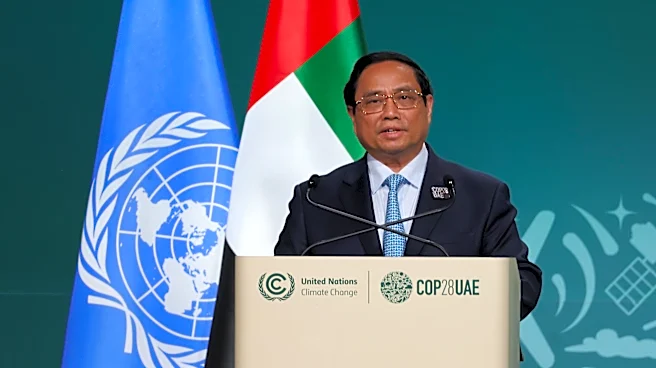
A U.S. delegation comprising over 120 state, local, and cross-sector leaders is set to participate in the 31st U.N. Climate Change Conference (COP31) in Antalya, Türkiye, from November 9 to November 20. This delegation, organized by America Is All In,
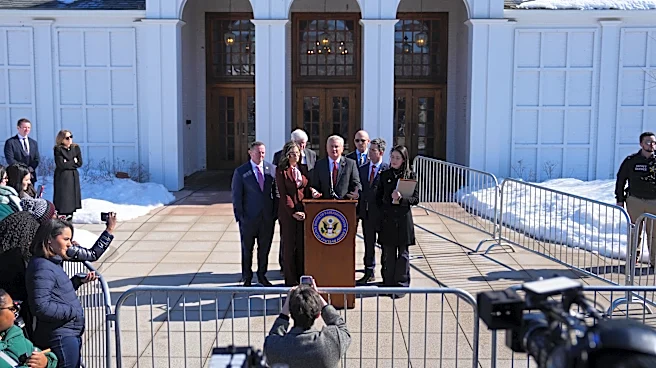
the U.S. Climate Alliance, and Climate Mayors, aims to showcase the strength of U.S. subnational climate leadership and action on the global stage. The group includes governors, mayors, and other senior officials, led by America Is All In Chair Gina McCarthy, Governor Michelle Lujan Grisham of New Mexico, Mayor Vicki Veenker of Palo Alto, California, and Mayor Janet Cowell of Raleigh, North Carolina. They will engage in key discussions and programming at the America Is All In Pavilion, emphasizing local climate solutions that reduce energy costs, create jobs, and cut pollution in American communities.
Why It's Important?
This delegation's participation at COP31 is significant as it demonstrates a continued commitment to climate action from U.S. subnational entities, even as federal climate policies may fluctuate. The 'America Is All In' network, which includes partners representing two-thirds of the U.S. population and three-quarters of the U.S. GDP, highlights the substantial impact that states, cities, businesses, and other institutions have on climate goals. By showcasing local climate solutions, the delegation aims to foster international partnerships and scale up efforts to lower carbon emissions and improve public health. This initiative underscores the idea that climate action can strengthen local economies and communities, providing a model for other nations. The presence of such a large and diverse U.S. subnational group at an international climate summit reinforces the message that climate progress is being driven from the ground up, regardless of national political shifts.
What's Next?
The U.S. delegation will participate in a full schedule of events at COP31, including the launch of 'America’s Better Pathway Report' which will explore research on U.S. carbon emissions and reduction pathways. Other events include discussions on building resilient communities and thriving economies, a press conference to reaffirm U.S. climate commitments, and conversations on deepening cooperation between subnational and international counterparts. Governors will discuss sustaining U.S. climate progress through state-led actions, and women climate leaders will share their perspectives. The delegation aims to build partnerships and solutions that lower carbon emissions, reduce pollution, and improve lives globally. These discussions and collaborations are intended to translate into tangible actions and policies at the state and local levels back in the U.S., further advancing climate goals and demonstrating the effectiveness of subnational leadership.
Beyond the Headlines
The robust presence of U.S. state and local leaders at COP31 signals a strategic effort to maintain and advance climate diplomacy, even when federal engagement might be perceived as less consistent. This 'subnational diplomacy' can serve as a critical counterbalance, ensuring that the U.S. remains a player in global climate efforts and that domestic climate initiatives continue to gain momentum. It also highlights a shift in climate governance, where cities and states are increasingly recognized as vital actors in achieving national and international climate targets. The focus on economic benefits, such as job creation and reduced energy costs, frames climate action not just as an environmental imperative but also as an economic opportunity, potentially broadening its appeal across political divides. This approach could inspire other countries to empower their subnational entities in climate action, fostering a more distributed and resilient global response to climate change.