




What's Happening?
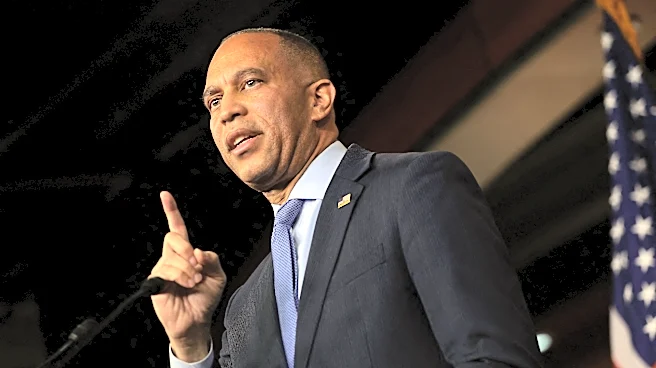
House Democratic Leader Hakeem Jeffries has defended his recent private meeting with Jared Kushner, President Trump’s son-in-law and close adviser, which took place in New York. The meeting, first reported by The New York Times, aimed to discuss potential
areas of collaboration between the White House and Democrats on key issues such as immigration, housing, and the rising cost of living. Jeffries stated that Kushner requested the meeting, and he accepted to address the affordability crisis in the country. This engagement has drawn criticism from some progressive journalists and former Obama staffers, who argue that Kushner, who holds no official government position, should not be engaged in such discussions and instead should be subject to investigations. Conversely, some prominent Democrats, including Illinois Gov. JB Pritzker and New York Mayor Zohran Mamdani, have expressed support for Jeffries, emphasizing the need to hold the Trump administration accountable while also seeking solutions for American citizens. Jeffries has also indicated that he has not ruled out impeaching President Trump if Democrats regain the majority in the House.
Why It's Important?
This meeting highlights the complex political landscape and the strategic considerations facing Democratic leadership. Jeffries' decision to meet with Kushner, despite the potential for backlash from his party's progressive wing, underscores a pragmatic approach to governance, seeking common ground on critical issues affecting Americans. The affordability crisis, encompassing housing and the cost of living, is a significant concern for many U.S. households, and any bipartisan effort to address it could have a tangible impact on citizens' economic well-being. However, the criticism from progressives reflects a deep-seated distrust of the Trump administration and its associates, raising questions about the appropriateness of engaging with individuals perceived to be outside official government channels. This internal party division could influence future legislative strategies and the Democratic Party's unity as the midterm elections approach. The discussion also touches upon the ongoing debate about accountability for the Trump administration, with Jeffries not ruling out impeachment, signaling a continued focus on oversight if Democrats secure a House majority.
What's Next?
The immediate aftermath of this meeting will likely involve continued debate and scrutiny within the Democratic Party regarding the strategy of engaging with figures associated with the Trump administration. Jeffries' willingness to meet with Kushner suggests a potential openness to bipartisan discussions on specific issues, which could lead to further, albeit cautious, engagements. However, the strong reactions from some progressive voices indicate that any future collaborations would be met with significant internal resistance. As the midterm elections draw closer, the focus on issues like the affordability crisis will intensify, and both parties will likely present their solutions to voters. Jeffries' stance on not ruling out impeachment for President Trump if Democrats win back the House majority signals a potential shift in legislative priorities and a more aggressive oversight agenda should the political landscape change. The ongoing discussions about accountability and the cost of living will remain central to the political discourse.
Beyond the Headlines
The meeting between Hakeem Jeffries and Jared Kushner delves into the deeper complexities of political engagement in a highly polarized environment. It raises questions about the balance between ideological purity and pragmatic problem-solving. For Jeffries, the decision to meet with Kushner, despite the political risks, could be interpreted as an attempt to demonstrate a willingness to work across the aisle on issues that directly affect the American public, thereby positioning the Democratic Party as a responsible governing force. However, the backlash highlights the ethical considerations of engaging with individuals who may be perceived as having conflicts of interest or lacking official governmental authority. This incident also underscores the evolving nature of political influence, where individuals outside traditional government roles can still play a significant part in policy discussions. The long-term implications could include a re-evaluation of how political leaders engage with non-governmental actors and the potential for such interactions to either foster bipartisan solutions or exacerbate existing political divides.