






What's Happening?
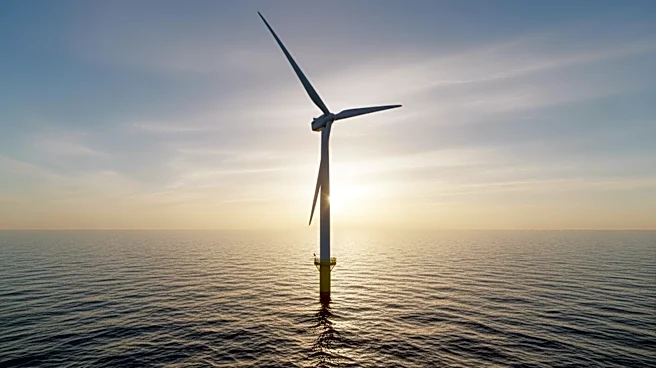
The European Union, through its Horizon Europe research and innovation program, has allocated a €5 million ($5.8 million) grant to develop offshore charging infrastructure for stationary vessels. Led by Stillstrom, a Maersk company, the project aims to demonstrate
the feasibility of offshore power zones where vessels can plug into at-sea power points, reducing emissions from idling ships. The pilot project, set to begin in June and run for 36 months, will initially test a single ship connection near Skagen, Denmark. This initiative targets the significant greenhouse gas emissions produced by vessels at anchor, estimated at over 30 million tons annually.
Why It's Important?
This project represents a significant step towards decarbonizing the maritime industry, which is a major contributor to global greenhouse gas emissions. By providing a practical solution for reducing emissions from idling vessels, the EU is addressing a critical environmental challenge. The success of this pilot could pave the way for broader adoption of offshore charging infrastructure, potentially transforming maritime operations and contributing to global climate goals. Additionally, this initiative highlights the EU's commitment to innovation and sustainability in the maritime sector, setting a precedent for other regions to follow.
What's Next?
The pilot project will focus on proving the concept's viability and assessing its commercial and regulatory implications. If successful, it could lead to the establishment of more offshore power zones, significantly reducing emissions from the maritime industry. The project's outcomes will likely influence future policy decisions and investments in maritime infrastructure. Stakeholders, including shipping companies and environmental groups, will be closely monitoring the project's progress and its potential impact on maritime operations and environmental standards.