



What's Happening?
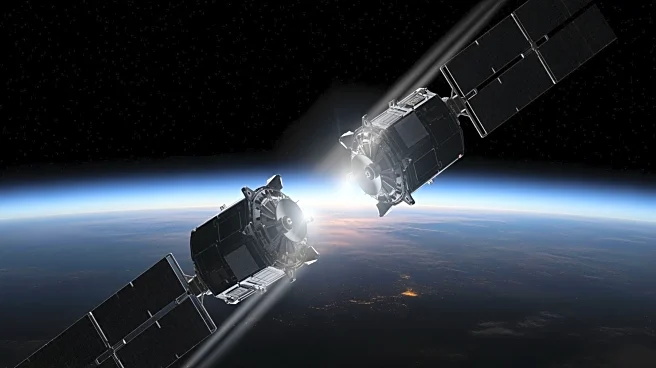
SpaceX has reported a near-collision between one of its Starlink satellites and a Chinese spacecraft, missing by approximately 200 meters. The incident underscores the growing congestion in low Earth orbit (LEO) as more satellites are launched. SpaceX criticized
the lack of shared trajectory data, which is crucial for collision avoidance. The Chinese launch provider, CAS Space, stated that it followed mandatory pre-launch procedures and that the close approach occurred after its mission had concluded. The event has sparked discussions about the need for improved coordination and data sharing among satellite operators.
Why It's Important?
The near-miss highlights the increasing risks associated with the rapid expansion of satellite constellations in LEO. As more companies and countries launch satellites, the potential for collisions and space debris increases, posing threats to both operational satellites and future space missions. This incident emphasizes the need for international cooperation and the establishment of standardized protocols for data sharing and collision avoidance. The situation also raises concerns about the sustainability of space activities and the long-term viability of satellite operations.
What's Next?
The incident may prompt regulatory bodies and international organizations to push for more stringent coordination and data-sharing requirements among satellite operators. SpaceX and other companies may advocate for clearer guidelines and improved communication channels to prevent future close calls. The growing number of satellites in LEO will likely lead to more discussions about space traffic management and the development of technologies to enhance collision avoidance capabilities.