



What's Happening?
Iran is experiencing significant unrest as protests have erupted across the country, driven by a severe economic crisis and widespread dissatisfaction with the government. The national currency has plummeted, with inflation rates soaring above 50%, severely
impacting all socioeconomic classes. The regime, led by Ayatollah Ali Khamenei, is facing internal challenges as elite factions become increasingly alienated. The Islamic Revolutionary Guard Corps (IRGC) has become a dominant force, overshadowing traditional power bases like the bazaar merchants, who have turned from supporters to dissenters. The regime's ideological cohesion is weakening, with many insiders prioritizing personal enrichment over national or religious loyalty. This unrest is compounded by international isolation and economic sanctions, further straining the regime's ability to maintain control.
Why It's Important?
The potential collapse of the Iranian regime could have significant implications for regional stability and international relations. Iran's strategic position and its role in regional conflicts mean that any change in governance could alter power dynamics in the Middle East. The economic crisis and social unrest highlight the regime's inability to provide basic services and security, undermining its legitimacy. A shift in power could impact global oil markets, given Iran's role as a major oil producer. Additionally, the situation presents a challenge for international actors, including the United States, which has historically had a contentious relationship with Iran. The outcome of this unrest could influence U.S. foreign policy and its approach to Middle Eastern geopolitics.
What's Next?
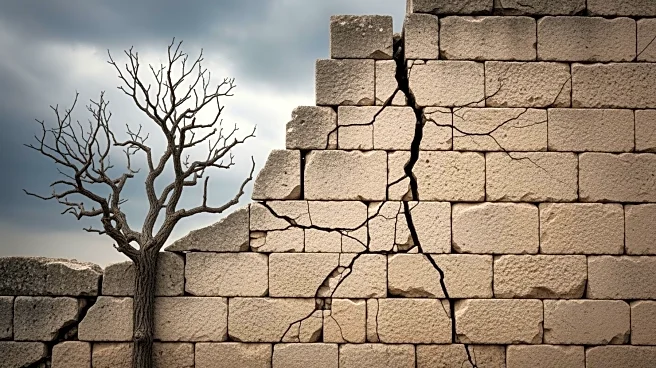
The future of Iran's regime depends on several factors, including the response of the IRGC and other security forces. If these forces remain loyal, the regime may continue to suppress dissent. However, if defections occur, it could signal a tipping point towards regime change. The opposition needs to unify and present a credible alternative to attract disaffected elites. International actors may also play a role, as external pressure or support could influence the regime's stability. The situation remains fluid, with potential for either increased repression or a move towards reform and change.
Beyond the Headlines
The unrest in Iran reflects deeper issues of governance and legitimacy, as the regime's reliance on ideological loyalty over competence has eroded its effectiveness. The economic mismanagement and corruption have alienated the population, leading to calls for a 'normal life' free from state interference. The opposition's ability to capitalize on this sentiment and offer a vision for the future will be crucial. The situation also raises questions about the role of external powers in supporting or undermining regimes, and the ethical implications of such interventions.