
What's Happening?
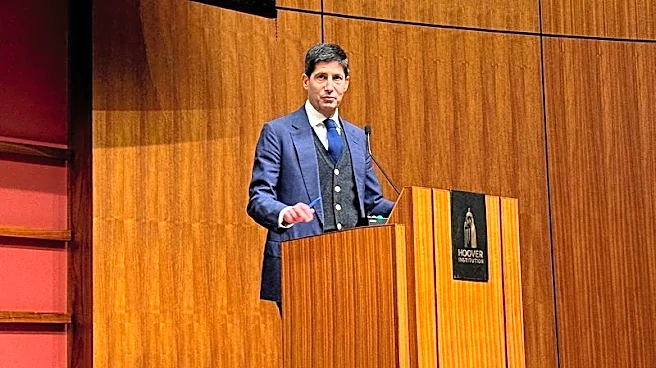
The White House has accused Chinese entities of conducting large-scale campaigns to copy American artificial intelligence (AI) models. According to a memo from Michael Kratsios, the White House director
of the office of science and technology policy, these campaigns involve using tens of thousands of surrogate accounts and complex tools to extract proprietary information from U.S. companies. The process at the center of these accusations is known as 'distillation,' which transfers knowledge from a large AI model to a smaller one. This technique, while common in AI training, has been allegedly used by Chinese firms like DeepSeek to mimic the capabilities of U.S. models, including those from companies like Anthropic and OpenAI. The U.S. and China are in a competitive race to develop advanced AI technologies, with AI becoming a significant point of tension in their trade relations.
Why It's Important?
The allegations highlight the ongoing technological rivalry between the U.S. and China, particularly in the field of AI, which is crucial for economic and national security. The U.S. aims to maintain its leadership in AI innovation, a goal that is central to President Trump's administration. The unauthorized copying of AI models could undermine U.S. companies' competitive edge and pose security risks, as distilled models may lack the original models' safeguards. This situation could lead to increased scrutiny and regulation of AI technologies, impacting how companies develop and protect their innovations. The U.S. government's response, including sharing information with AI companies and exploring accountability measures for foreign actors, underscores the strategic importance of AI in global power dynamics.
What's Next?
The Trump administration plans to take several actions in response to these campaigns. These include improving coordination between private companies and sharing information about unauthorized distillation attempts. The administration also intends to explore measures to hold foreign actors accountable and work with the private sector to develop best practices for defending against such activities. These steps are part of a broader strategy to cement the U.S. as a leader in AI technology. However, the approach of federal regulation over state-level rules has faced criticism for potentially allowing AI companies to evade accountability. The administration's actions will likely influence future U.S.-China relations and the global AI landscape.