

What's Happening?
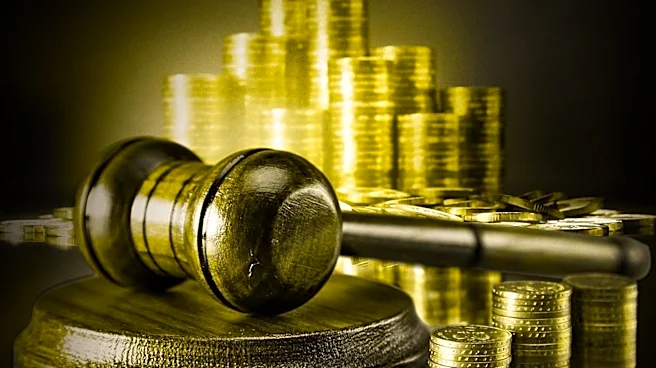
Brooklyn Democratic Party leaders, including former chairman Frank Seddio and current chair Rodneyse Bichotte-Hermelyn, are accused of collecting nearly $200,000 in campaign donations from judges and judicial candidates since 2012. Critics, including government
watchdog group Citizens Union, describe this practice as a 'pay-to-play shakedown' for nominations. Insiders claim that sitting judges bypass rules designed to keep them out of partisan politics, and candidates are pressured to attend party events and pay specific vendors to secure nominations. New York State guidelines allow judges and judicial candidates to buy two tickets to political events at a maximum of $250 per ticket, but records suggest jurists attend dozens of such events annually. The Shirley Chisholm Democratic Club, led by Bichotte-Hermelyn, also reportedly collected over $53,000 from judges and candidates for 'petition expenses' without proper expense documentation.
Why It's Important?
This situation raises significant concerns about the integrity and independence of the judiciary in New York City. If judicial nominations are influenced by campaign donations and loyalty to political parties, it undermines public confidence in the fairness and impartiality of the courts. The alleged circumvention of campaign finance rules by judges and party officials could lead to a perception of corruption and erode trust in the legal system. This issue is particularly critical in a large metropolitan area like New York City, where judicial decisions impact a vast population. Government watchdog groups are calling for investigations, emphasizing the need for an independent judiciary free from political influence, which is a cornerstone of American democracy.
What's Next?
Government watchdog groups like Citizens Union are calling for a wider investigation into these alleged practices, suggesting that a special prosecutor might be needed to address the 'deeply entrenched rot.' The Commission for Judicial Conduct, which oversees such donations, has reportedly requested information gathered by The Post. This could lead to formal inquiries and potential disciplinary actions against judges or party officials found to have violated ethical guidelines or campaign finance laws. The state Board of Elections, which has been criticized for 'meek enforcement,' may face pressure to strengthen its oversight. The outcome of any investigation could result in reforms to judicial selection processes and campaign finance regulations in New York State.
Beyond the Headlines
The alleged 'shakedown' of judicial candidates by political party leaders highlights a systemic vulnerability in how judges are selected and how political power is wielded at the local level. This issue extends beyond mere campaign finance violations; it touches upon the ethical fabric of the justice system and the potential for political machines to exert undue influence over a branch of government meant to be impartial. The practice of judges declaring candidacy for county seats annually to justify continuous donations, as alleged by insiders, reveals a sophisticated method of exploiting loopholes. This situation underscores the ongoing tension between political fundraising necessities and the imperative for an independent judiciary, a challenge that many democratic systems grapple with.