








What's Happening?
Greenpeace Hong Kong has issued a warning regarding the increasing issue of overtourism at local eco-sites, following observations during mainland China's weeklong National Day holiday. The environmental NGO recorded thousands of visitors and numerous
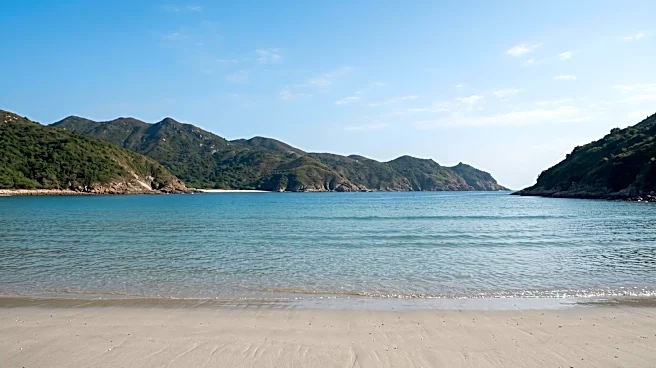
instances of environmental damage at popular natural attractions. Specifically, on October 4, 3,010 visitors were counted at Half Moon Bay on Sharp Island, with over 100 instances of marine life capture. On October 1, Long Ke Wan Beach in Sai Kung saw approximately 1,516 visitors and 89 recorded instances of environmental damage. Greenpeace also noted that the Po Pin Chau viewing platform exceeded its official capacity with 64 people present at one time on October 1. The organization criticized the government's current measures, such as allocating extra personnel and reservation systems, as temporary 'painkillers' that fail to address the root cause of overtourism. They urged the Culture, Sports and Tourism Bureau (CSTB) and the Environment and Ecology Bureau (EEB) to develop a comprehensive ecotourism policy, including visitor caps and routine environmental impact monitoring.
Why It's Important?
This situation highlights the critical challenge of balancing tourism development with environmental preservation, particularly in ecologically sensitive areas. Overtourism, as evidenced by the high visitor numbers and environmental damage, can lead to irreversible degradation of natural habitats, loss of biodiversity, and diminished visitor experience. For Hong Kong, a region that relies on its natural beauty for both local recreation and international tourism, the long-term sustainability of these sites is at risk. The call from Greenpeace for a 'conservation-first ecotourism policy' underscores the necessity for proactive and comprehensive management strategies, rather than reactive measures. Without proper visitor caps and continuous monitoring, the economic benefits of tourism could be undermined by the ecological costs, potentially harming Hong Kong's reputation as a sustainable travel destination and impacting the well-being of its natural environment.
What's Next?
Greenpeace has urged the Hong Kong government to immediately conduct carrying capacity assessments for all countryside hotspots and establish maximum visitor caps for each site. In the long term, the organization recommends that the Culture, Sports and Tourism Bureau and the Environment and Ecology Bureau establish a 'conservation-first ecotourism policy.' This policy should include routine monitoring of environmental impacts caused by visitors and the formulation of corresponding management measures. Greenpeace also suggested that the proposed protection boundary of the Sharp Island Marine Park should encompass the entire island's waters to prevent displacement of tourists to other vulnerable areas like Half Moon Bay. The implementation of such comprehensive policies, including seasonal trail closures for restoration, will be crucial to ensure the sustainability of Hong Kong's natural parks and prevent further environmental degradation.
Beyond the Headlines
The issue of overtourism in Hong Kong reflects a broader global dilemma where the economic benefits of tourism often clash with environmental sustainability. This situation brings to light the ethical responsibility of governments and tourism operators to manage natural resources judiciously. The concept of 'greenwashing,' where businesses or destinations falsely claim eco-friendliness, becomes particularly relevant here, emphasizing the need for genuine conservation efforts rather than superficial measures. The long-term implications extend beyond ecological damage to potential cultural erosion and a decline in the quality of life for local communities. Effective ecotourism policies, as advocated by Greenpeace, are not just about protecting nature but also about fostering a sustainable relationship between humans and their environment, ensuring that natural attractions can be enjoyed by future generations without being irrevocably harmed. This case serves as a stark reminder that without robust regulatory frameworks and a commitment to conservation, even well-intentioned tourism can become a destructive force.