



What's Happening?
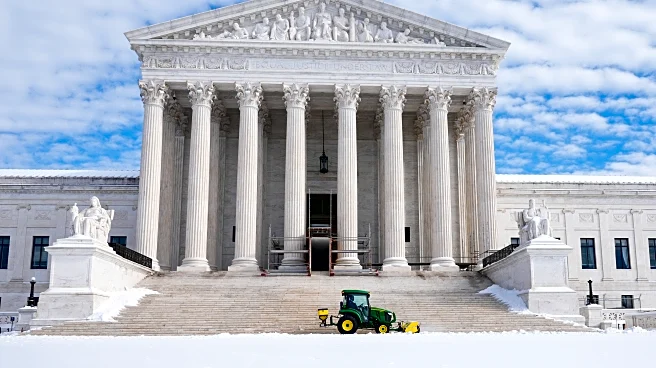
The U.S. Supreme Court is hearing arguments in a case that could significantly expand presidential power by allowing the president to fire members of the Federal Trade Commission (FTC). The case, Trump v. Slaughter, has sparked a heated debate among the justices,
with liberal Justice Sonia Sotomayor challenging the administration's push to overturn a 90-year precedent that limits presidential authority over independent agencies. The conservative majority appears inclined to side with the president, potentially affecting the independence of numerous federal agencies.
Why It's Important?
The outcome of this case could redefine the balance of power between the executive branch and independent federal agencies. If the court sides with the administration, it could grant the president unprecedented control over agencies traditionally insulated from political influence. This shift could impact regulatory oversight, consumer protection, and the enforcement of federal laws. The decision may also set a precedent for future cases involving executive power, influencing the structure and function of the U.S. government. Stakeholders, including businesses and civil society groups, are closely monitoring the case for its potential implications on governance and accountability.
What's Next?
The Supreme Court's decision in this case will be pivotal, with potential ramifications for the independence of federal agencies. If the court rules in favor of expanding presidential power, it could lead to further challenges to the autonomy of other agencies. The decision may also prompt legislative responses aimed at preserving agency independence. As the court deliberates, stakeholders will be assessing the broader impact on the separation of powers and the future of regulatory governance in the U.S. The case underscores the ongoing debate over the scope of executive authority and its implications for democratic institutions.