
What's Happening?
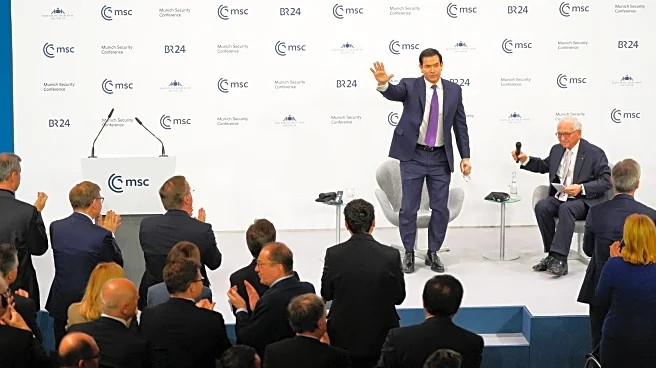
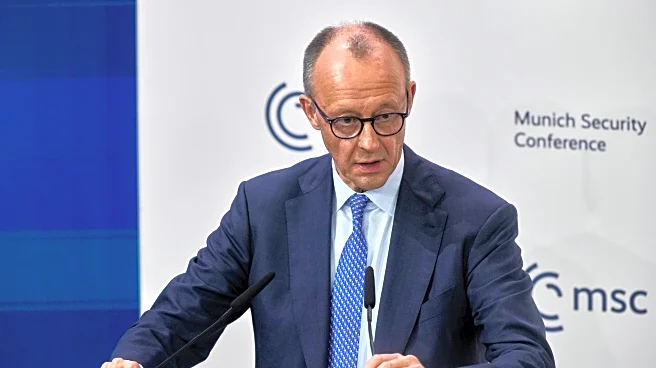
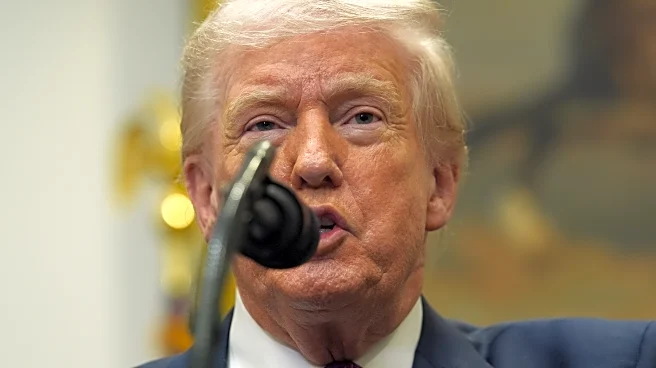
During the Munich Security Conference, Danish Prime Minister Mette Frederiksen expressed concerns over President Donald Trump's persistent interest in acquiring Greenland. This issue was highlighted during a panel discussion where both the Danish and Greenlandic
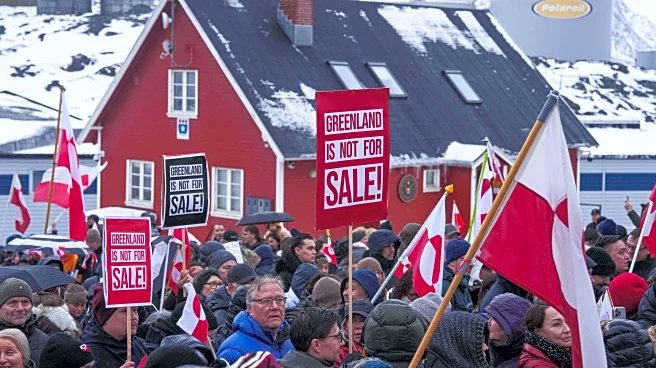
prime ministers voiced their apprehensions. Frederiksen emphasized that despite previous discussions, the matter is not considered resolved. The conference, which gathers global leaders to discuss security issues, provided a platform for Denmark to reiterate its stance against any potential sale of Greenland, a semi-autonomous Danish territory. The topic has resurfaced as a point of contention, reflecting ongoing geopolitical tensions.
Why It's Important?
The continued interest of President Trump in Greenland underscores significant geopolitical implications. Greenland's strategic location and natural resources make it a valuable asset, and any change in its status could alter regional power dynamics. For Denmark and Greenland, maintaining sovereignty is crucial, while for the U.S., acquiring Greenland could enhance its Arctic presence. This situation also highlights broader issues of national sovereignty and international diplomacy, as countries navigate complex relationships and territorial interests. The ongoing dialogue reflects the delicate balance of power and the importance of diplomatic engagement in resolving such disputes.
What's Next?
The future of this issue may involve further diplomatic discussions between the U.S., Denmark, and Greenland. As the situation develops, it is likely that international bodies and other nations with interests in the Arctic will also engage in dialogue. The outcome could influence future U.S. foreign policy and its approach to territorial acquisitions. Additionally, Denmark and Greenland may seek to strengthen their international alliances to counter any potential U.S. advances. Monitoring the responses from other Arctic nations and international organizations will be crucial in understanding the broader implications of this geopolitical issue.