



What's Happening?
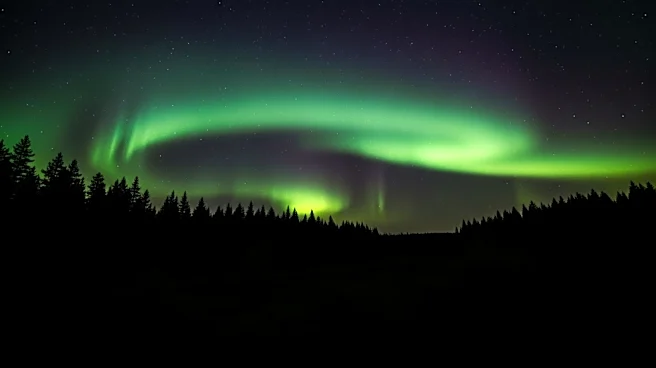
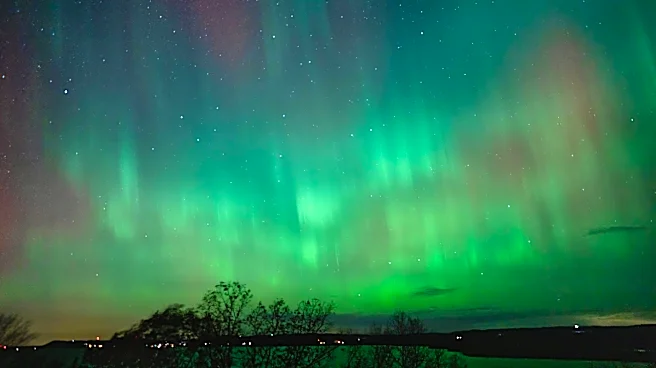
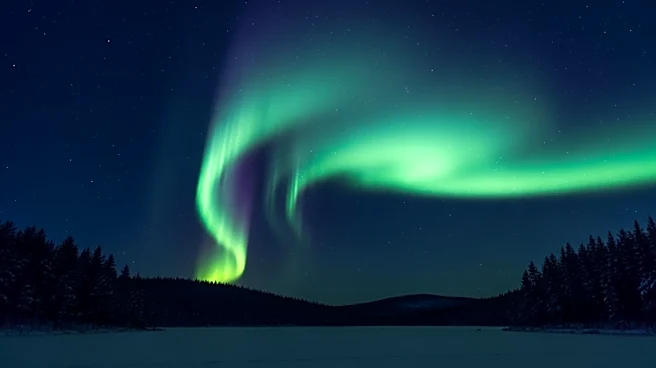
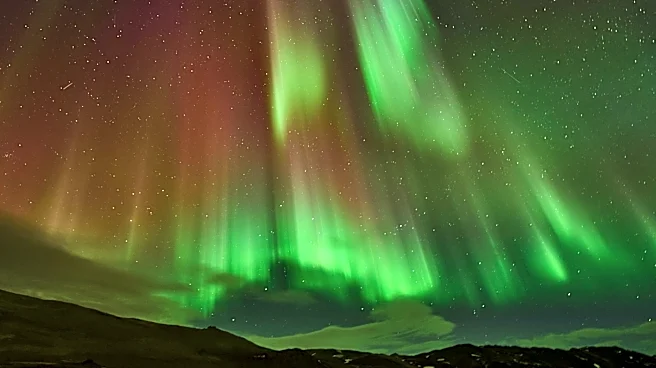
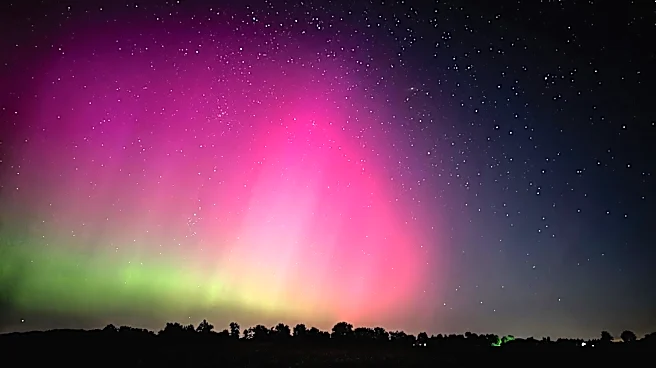
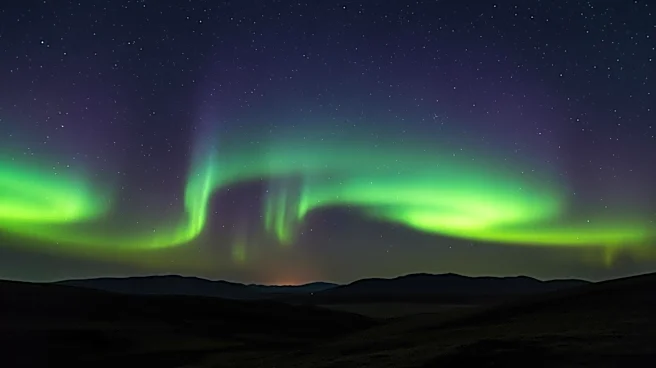
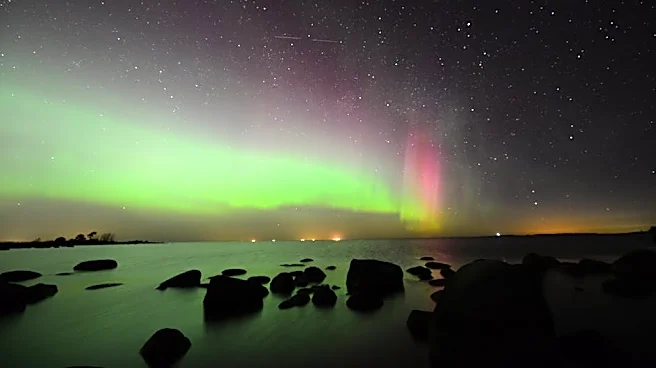
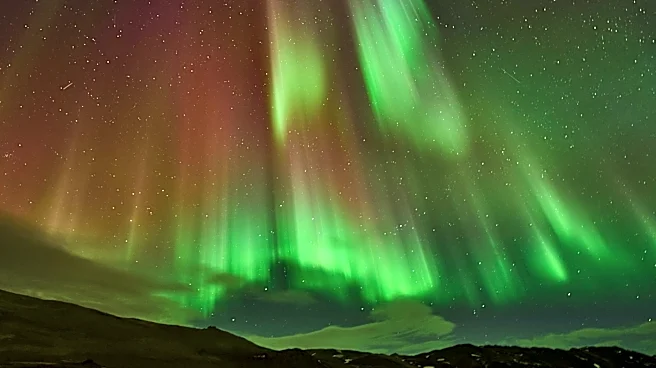
The National Oceanic and Atmospheric Administration (NOAA) has forecasted that the northern lights, also known as the aurora borealis, will be visible across several U.S. states this weekend. The phenomenon is expected to be observable from the late-night
hours of Friday, May 15, into the early morning of Saturday, May 16, and again later that night into Sunday, May 17. The best viewing times are generally between 10 p.m. and 2 a.m., although this can vary by location. The auroras may be visible further south than usual due to geomagnetic storms peaking over the weekend. States such as Alaska, North Dakota, South Dakota, Minnesota, Wisconsin, Michigan, Maine, Montana, Idaho, and Washington are expected to have the best chances of viewing the lights. If the geomagnetic activity reaches a G2 level, the lights could also be seen in New York, Illinois, Iowa, Wisconsin, and Oregon.
Why It's Important?
The visibility of the northern lights in the U.S. is a rare and captivating natural event that draws significant public interest. It provides an opportunity for educational engagement regarding atmospheric sciences and geomagnetic phenomena. The event also has potential economic implications, as it may boost local tourism in areas where the lights are visible, attracting visitors eager to witness the spectacle. Additionally, the occurrence of such geomagnetic storms can have broader implications for satellite operations and communications, highlighting the importance of monitoring space weather.
What's Next?
As the weekend progresses, NOAA will continue to update its forecasts, providing more precise information on the best times and locations for viewing the northern lights. Enthusiasts and photographers are likely to prepare for the event by finding optimal viewing spots away from light pollution. Local businesses in areas with expected visibility may see an increase in visitors, and educational institutions might use the event as a teaching moment about space weather and atmospheric science.
Beyond the Headlines
The occurrence of the northern lights serves as a reminder of the interconnectedness of solar activity and Earth's atmospheric conditions. It underscores the importance of space weather research and its implications for technology-dependent societies. The event also highlights the cultural significance of natural phenomena, as the auroras have been a source of inspiration and mythology across different cultures throughout history.