







What's Happening?
President Trump is reportedly opposed to formal regulation of Artificial Intelligence (AI) in the United States. This stance comes as global discussions intensify regarding the need for comprehensive AI governance. Other nations and international bodies
are actively developing frameworks to manage the risks associated with rapidly advancing AI technology. For instance, the European Union has introduced its AI Act, which employs a risk-tiered framework to classify AI systems and enforce accountability. This act includes legal explanations, practical examples, and mechanisms for enforcement through member states, the European Data Protection Supervisor, and the European Commission's AI Office, which can issue fines for noncompliance. In contrast, the U.S. faces a political deadlock on AI regulation, with differing views among political figures. While President Trump expresses opposition to formal regulation, some politicians, like Senator Bernie Sanders, advocate for international cooperation on AI regulation, potentially involving countries like China. The lack of a unified approach in the U.S. highlights a significant divergence from the regulatory efforts seen in other major global economies.
Why It's Important?
The U.S. position on AI regulation, particularly President Trump's opposition to formal frameworks, carries significant implications for the nation's technological development, economic competitiveness, and ethical standards. Without a clear regulatory structure, U.S. AI companies might operate with fewer constraints compared to their counterparts in regions like the European Union, potentially fostering rapid innovation but also raising concerns about accountability and consumer protection. This divergence could create a complex international landscape where U.S. firms might face challenges in complying with diverse global regulations if they operate internationally. Furthermore, the absence of a robust regulatory framework could leave the U.S. vulnerable to the ethical and societal risks associated with AI, such as algorithmic bias, privacy infringements, and cybersecurity vulnerabilities, without adequate mechanisms for redress or oversight. The ongoing political deadlock also means that the U.S. might lag in shaping global AI governance norms, potentially ceding influence to other nations that are more proactive in establishing regulatory precedents.
What's Next?
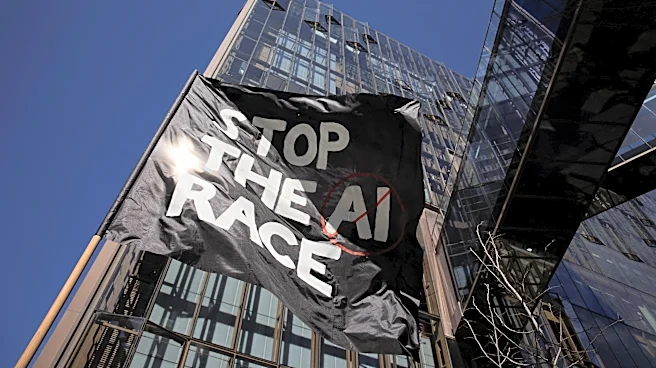
The future of AI regulation in the U.S. remains uncertain given the current political climate. With President Trump's stated opposition to formal regulation, any significant legislative action in this area is likely to face considerable hurdles. However, individual states or specific federal agencies might continue to explore targeted regulations or guidelines for AI within their jurisdictions, addressing particular concerns such as data privacy or algorithmic transparency. Internationally, the pressure for global AI regulation is expected to grow, with countries like Australia advocating for an international approach similar to those seen in aviation or nuclear energy. This could lead to increased calls for the U.S. to engage more actively in multilateral discussions and potentially adopt some form of regulatory alignment to avoid fragmentation in the global AI landscape. The ongoing debate will likely involve various stakeholders, including tech companies, civil society groups, and international organizations, all pushing for different approaches to balance innovation with responsible AI development.
Beyond the Headlines
The U.S.'s hesitant approach to formal AI regulation, particularly in contrast to the EU's comprehensive AI Act, highlights a fundamental philosophical difference in how major global powers view technological governance. This divergence could lead to a 'regulatory arbitrage' scenario, where AI companies might choose to develop or deploy certain technologies in jurisdictions with less stringent oversight, potentially creating ethical and safety concerns. The long-term implications extend to the global standards for AI, as the absence of a strong U.S. regulatory voice could diminish its influence in shaping international norms and ethical guidelines for AI development. This situation also raises questions about the balance between fostering innovation and ensuring public trust and safety in emerging technologies. The ethical dimensions, such as accountability for AI-driven harms and the protection of human rights in an AI-powered world, will continue to be central to this debate, potentially leading to a patchwork of regulations that could complicate global AI development and deployment.