





What's Happening?
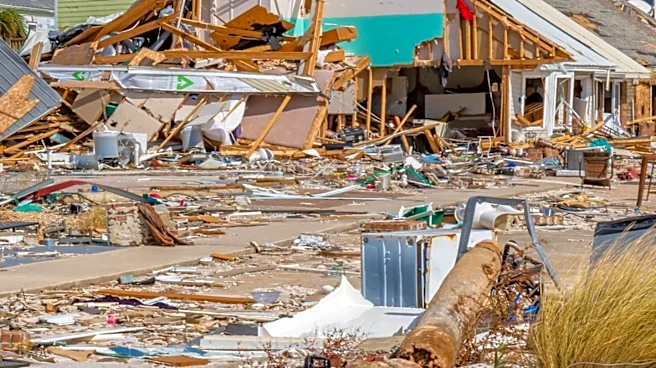
Wyandotte County, Kansas, is grappling with significant damage following severe thunderstorms that struck on Tuesday night and early Wednesday morning. The storms brought 70-MPH winds, toppled power poles, damaged roofs, and pelted vehicles with golf-ball-sized
hail. As of Thursday evening, approximately 9,000 homes and businesses remained without power. Interim Wyandotte County Administrator Alan Howze reported extensive property damage but noted no loss of life or injuries. The hardest-hit areas span the northern part of the county, from Piper to Quindaro. Unified Government Mayor Christal Watson described instances of caved-in roofs and trapped pets. Damage assessments are ongoing, with county officials meticulously documenting all impacts, including those to schools, parks, and the power grid, to determine eligibility for emergency funds. However, federal assistance from FEMA is considered unlikely due to the localized nature of the storm and the county's relatively low property values, which make it difficult to meet the statewide damage thresholds required for federal aid.
Why It's Important?
The situation in Wyandotte County highlights a critical challenge faced by local governments in the U.S. when dealing with localized natural disasters: the stringent criteria for federal emergency assistance. While the storm caused substantial property damage and widespread power outages, the county's inability to meet the state's $5.7 million damage threshold for individual federal assistance means residents and the county itself will likely receive minimal external government support. This places a significant burden on the budget-strapped county and its residents, who must bear the costs of recovery largely on their own. The lack of federal aid can prolong recovery efforts, strain local resources, and exacerbate financial hardships for affected individuals and businesses. It also underscores a broader issue in disaster response, where communities with lower property values or isolated damage events may be disproportionately affected by federal aid policies, potentially leading to slower and less comprehensive recovery compared to areas that meet higher damage thresholds.
What's Next?
Wyandotte County officials are continuing their damage assessments, aiming to reach the $822,000 threshold for a County Emergency declaration. This declaration would streamline procurement processes and allow for overtime pay for county employees, but it would not introduce new funding. Unified Government Emergency Management Director Jennifer Tarwater expressed skepticism about reaching the $5.7 million statewide threshold required for individual federal assistance, emphasizing the localized nature of the damage. In response to the anticipated lack of federal aid, Unified Government leaders, including Commissioner Melissa Bynum, are actively calling for community volunteers. They are specifically requesting individuals with chainsaws and the ability to safely clear debris to assist in the cleanup efforts. The focus will remain on local resources and community support to manage the recovery, with ongoing efforts to restore power and repair damaged infrastructure.
Beyond the Headlines
This event in Wyandotte County brings to light the complex interplay between local disaster preparedness, community resilience, and federal aid policies. The reliance on volunteer efforts and local resources in the absence of federal assistance underscores the importance of community-level organization and mutual aid networks in disaster recovery. It also raises questions about the equity of federal disaster relief frameworks, particularly for communities that experience significant, yet geographically contained, damage. The long-term implications could include increased financial strain on local governments, potential out-migration from affected areas if recovery is slow, and a greater emphasis on local self-sufficiency in disaster planning. This situation may also prompt discussions about adjusting federal aid criteria to better support communities that, despite not meeting high statewide damage thresholds, face substantial localized devastation and limited financial capacity for recovery.