








What's Happening?
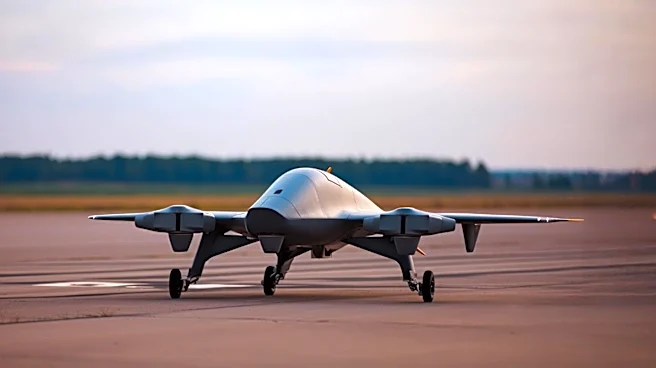
Ukraine's Defense Ministry has officially codified the Tsyklop interceptor drone, a new addition to its defense arsenal designed to counter Russian unmanned aerial vehicles (UAVs). The Tsyklop drone is capable of climbing above the maximum flight altitude
of Russian strike and reconnaissance UAVs, allowing it to destroy them from a superior position. This drone comes in two variants: a basic model for slower, low-flying targets, and a high-performance version designed to intercept faster drones like the Shahed. The Tsyklop has already proven effective, with the V2 variant reportedly destroying over 100 air targets, including a Russian Shahed over Kursk Oblast. Developed by a Ukrainian enterprise experienced in modern warfare, the Tsyklop is part of a rapidly expanding lineup of interceptors in Ukraine, which has codified 413 unmanned aerial systems in the first half of 2026 alone.
Why It's Important?
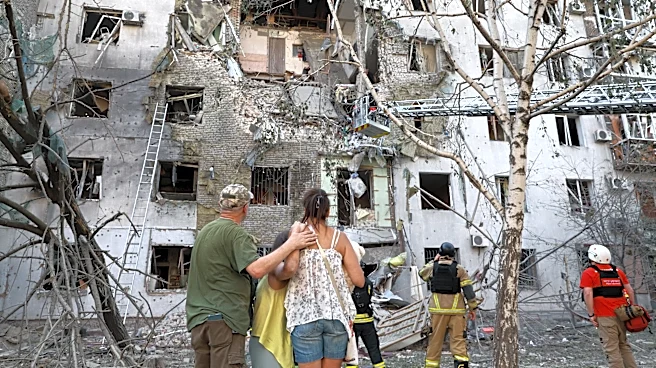
The introduction of the Tsyklop drone is a significant development in Ukraine's ongoing efforts to defend against Russian UAVs, which have been increasingly used for reconnaissance and strike missions. By codifying the Tsyklop, Ukraine enhances its ability to protect its airspace and regional centers from drone attacks. The drone's ability to outclimb and intercept faster Russian drones addresses a critical gap in Ukraine's defense capabilities, particularly against the jet-powered Geran-4 Shaheds. This advancement not only strengthens Ukraine's military position but also demonstrates the country's growing expertise in developing sophisticated defense technologies. The Tsyklop's success could influence future defense strategies and procurement decisions, both within Ukraine and among its allies.
What's Next?
As Ukraine continues to face threats from Russian UAVs, the deployment of the Tsyklop drone is expected to play a crucial role in its defense strategy. The Defense Ministry's decision to codify this system suggests a commitment to expanding and refining its interceptor capabilities. Future developments may include further enhancements to the Tsyklop's performance and the integration of additional technologies to counter evolving threats. The success of the Tsyklop could also lead to increased collaboration with international partners, potentially resulting in joint development projects or the export of Ukrainian defense technologies. Additionally, the ongoing conflict may drive further innovation in drone technology, as both sides seek to gain an advantage in aerial warfare.