








What's Happening?
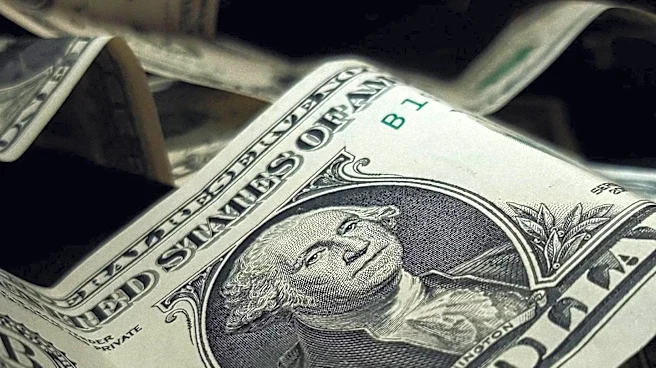
President Trump has unveiled a new $100 bill featuring his signature, marking the first time a sitting U.S. president's signature appears on American currency. This historic move was announced by Treasury Secretary Scott Bessent in March, in honor of
the 250th anniversary of the United States Declaration of Independence. The new $100 bill, which will soon be in circulation, symbolizes a significant departure from tradition, as previously only the signatures of the Treasury Secretary and the U.S. Treasurer appeared on banknotes. The decision to include President Trump's signature is seen as a recognition of his leadership and the economic achievements during his tenure.
Why It's Important?
This development is notable as it represents a symbolic gesture of presidential influence on national currency, potentially setting a precedent for future administrations. The inclusion of President Trump's signature on the $100 bill could be interpreted as a political statement, reflecting his administration's emphasis on economic growth and national pride. It may also influence public perception of the currency and the administration's legacy. The move could spark discussions on the role of presidential symbolism in national identity and economic policy.
What's Next?
As the new $100 bills enter circulation, there may be public and political reactions to this unprecedented change. Financial institutions and businesses will need to update their systems to accommodate the new currency. Additionally, this move could lead to debates about the appropriateness of presidential signatures on currency and its implications for future administrations. Observers will be watching to see if this sets a trend for future presidents or remains a unique decision tied to President Trump's tenure.