


What's Happening?
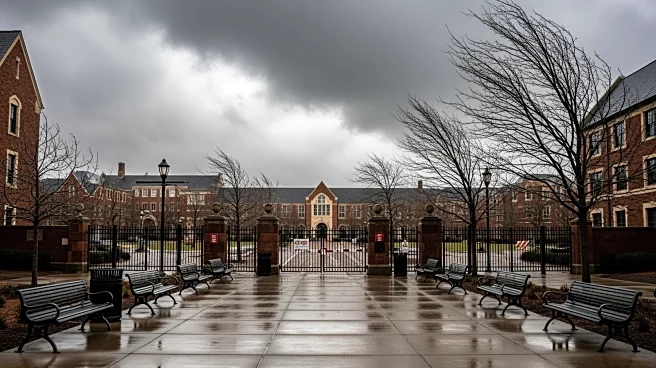
Western Nevada College (WNC) has announced the closure of its Carson City campus and the Child Development Center on February 17 due to hazardous weather conditions. Despite the physical closure, the college will continue its operations remotely. Student
services will be available through email, virtual appointments, and phone during regular business hours. The Fallon campus will remain open as scheduled. Similarly, the University of Nevada, Reno has suspended all non-essential campus operations and in-person classes, opting for remote operations instead. Students and faculty are advised to check online platforms for updates and instructions regarding remote classes. The decision to close these campuses comes as a precautionary measure in response to adverse weather and road conditions.
Why It's Important?
The closure of educational institutions like Western Nevada College and the University of Nevada, Reno due to weather conditions highlights the challenges faced by educational institutions in maintaining continuity during adverse weather events. This decision underscores the importance of having robust remote learning infrastructures to ensure that education can continue uninterrupted. The shift to remote operations also reflects a growing trend in educational flexibility, allowing institutions to adapt quickly to unforeseen circumstances. This move is crucial for the safety of students and staff, while also ensuring that educational activities can proceed without significant disruption.
What's Next?
As weather conditions continue to be monitored, both Western Nevada College and the University of Nevada, Reno will provide updates on their operational status through their respective websites and social media channels. Students and faculty are encouraged to stay informed about any changes to remote learning schedules or campus operations. The institutions may also evaluate the effectiveness of their remote learning systems and make necessary adjustments to improve the experience for students and staff. Additionally, the situation may prompt other educational institutions in the region to reassess their emergency preparedness and remote learning capabilities.