






What's Happening?
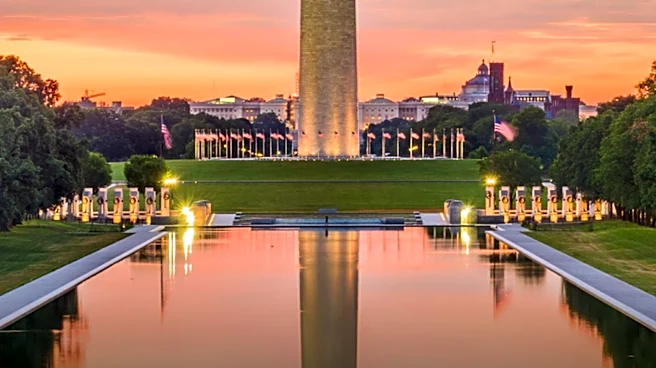
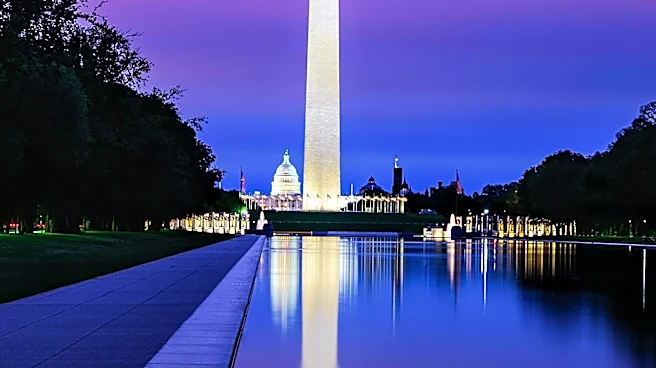
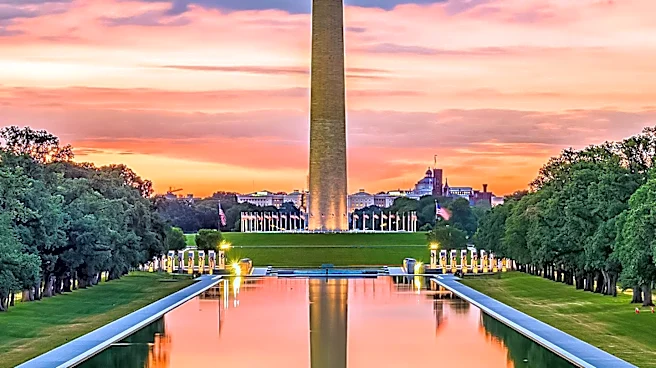
Tourists visiting the National Mall in Washington, D.C., were met with disappointment as the Lincoln Memorial Reflecting Pool was partially drained and fenced off. This closure is part of a renovation project that has faced significant controversy and maintenance
issues. The draining is intended to allow crews to remove debris from Independence Day fireworks, inspect and repair damage to the pool's liner, and address ongoing maintenance concerns. The project has been marred by claims of vandalism, with several individuals arrested and charged in connection with alleged damage to the site. The renovation, which included applying a dark blue coating to the pool's base, was supposed to be completed in time for the Fourth of July celebrations marking the nation's 250th anniversary. However, the project has faced setbacks, including reports of algae growth and peeling coating shortly after the pool was refilled.
Why It's Important?
The closure of the Lincoln Memorial Reflecting Pool during the peak summer travel season highlights the impact of infrastructure issues on tourism in Washington, D.C. The Lincoln Memorial is one of the most visited sites on the National Mall, attracting millions of visitors annually. The disruption not only affects tourists' experiences but also reflects broader challenges in maintaining and preserving historic landmarks. The controversy surrounding the renovation project underscores the complexities of managing public spaces and the potential for political and public scrutiny. The situation also raises questions about the effectiveness of the renovation efforts and the allocation of resources for such projects.
What's Next?
As the renovation project continues, authorities will likely focus on completing the necessary repairs and addressing the maintenance issues that have plagued the Reflecting Pool. The outcome of the legal proceedings against those charged with vandalism could influence public perception of the project. Additionally, the National Park Service and other stakeholders may need to reassess their strategies for managing and preserving historic sites to prevent similar issues in the future. The situation may prompt discussions about funding and oversight for infrastructure projects at national landmarks.