




What's Happening?
Negotiations between the United States and Iran, mediated by Pakistan, have reached a stalemate over the control of the Strait of Hormuz. The talks, held in Islamabad, are part of ongoing efforts to resolve a conflict that has disrupted global energy
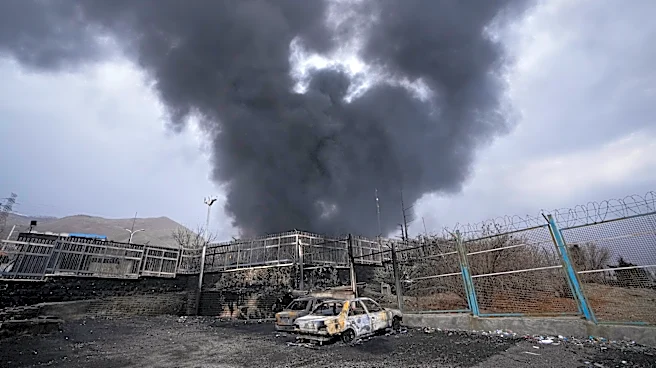
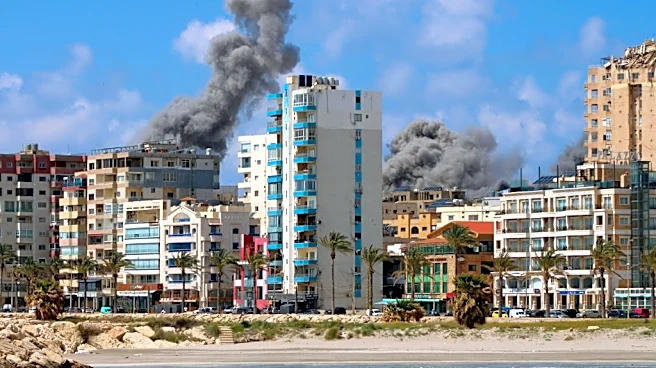
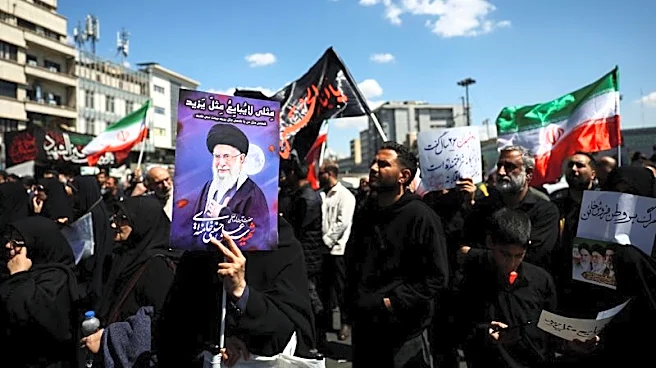
markets. Iran has set 'red lines' demanding compensation for damages from U.S.-Israel strikes and the release of frozen assets. The U.S. framework includes restrictions on Iran's nuclear program and reopening the Strait of Hormuz. The closure of the strait by Iran has significantly impacted global oil shipments, causing a spike in oil prices and concerns over supply shortages. The discussions are ongoing, with both sides exchanging written texts after initial direct talks.
Why It's Important?
The outcome of these negotiations holds significant implications for global energy markets and geopolitical stability. The Strait of Hormuz is a critical passage for about a fifth of the world's oil shipments. Its closure has already led to increased oil prices and potential fuel shortages, affecting economies worldwide. The talks also touch on broader issues such as Iran's nuclear program and regional influence, which are pivotal to U.S. foreign policy and security interests. A resolution could lead to eased tensions and economic relief, while failure to reach an agreement might exacerbate regional instability and economic disruptions.
What's Next?
The negotiations are expected to continue, with both sides under pressure to reach a compromise. The U.S. is likely to push for reopening the Strait of Hormuz to stabilize oil markets, while Iran seeks to maintain its influence over the waterway. The involvement of Pakistan as a mediator suggests a potential for diplomatic breakthroughs, but the complex nature of the issues at hand means that a resolution may take time. The international community will be closely monitoring the situation, given its far-reaching economic and political consequences.