



What's Happening?
The Electric Reliability Council of Texas (ERCOT) operates as a nonprofit entity responsible for managing the Texas electricity grid in real time, serving approximately 90% of the state's electric load. ERCOT's control room, located near Taylor, Texas,
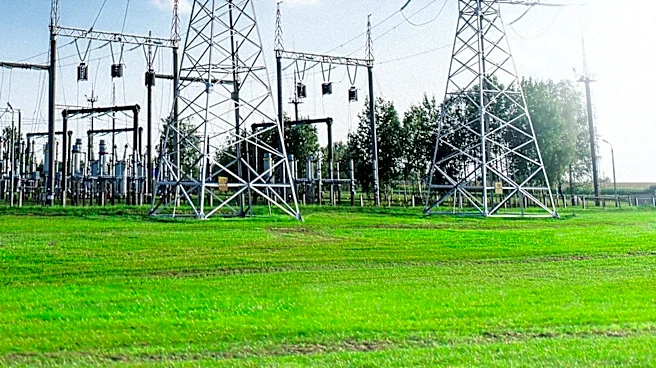
dispatches generators every five minutes, balances electricity supply against demand, and runs the wholesale electricity market. Unlike most of the U.S., Texas has a deregulated electricity market where about 85% of households can choose their retail electric provider (REP). This system involves three distinct entities: generators produce electricity, Transmission and Distribution Utilities (TDUs) move power across high-voltage lines and neighborhood distribution lines, and REPs buy electricity wholesale from ERCOT to sell to consumers. Texas's grid operates largely independently from the Eastern and Western U.S. interconnections, a decision made in 1935 to avoid federal regulation under the Federal Power Act. This independence, while fostering a competitive retail market, also limits the state's ability to import large amounts of power from neighboring grids during emergencies, as highlighted during Winter Storm Uri in 2021.
Why It's Important?
The unique structure of the Texas electricity market, overseen by ERCOT, has significant implications for consumers and the state's energy landscape. The ability for consumers to choose their REP is intended to foster competition and potentially lower costs, though understanding the complex billing structure and plan designs is crucial for actual savings. The separation of generation, transmission, and retail functions means that while REPs handle billing, TDUs are responsible for actual power delivery and outage repairs. ERCOT's role as the 'air traffic control' of the grid is vital for maintaining stability, especially during periods of high demand like summer heat waves or winter freezes, when grid reserves can become tight. The grid's isolation from national interconnections means Texas must be self-sufficient in its power generation and management, making ERCOT's real-time balancing act critical for preventing widespread outages. This independence also means that market dynamics, such as wholesale price spikes during scarcity events, directly impact consumers on indexed-rate plans.
What's Next?
ERCOT will continue its real-time management of the Texas grid, constantly balancing supply and demand, especially as electricity consumption rises due to population growth and extreme weather events. The post-Winter Storm Uri reforms, including generator weatherization rules and a lower wholesale price cap, aim to enhance grid resilience, particularly against cold weather events. However, the risk of grid strain during peak demand periods remains a recurring concern, prompting ERCOT to issue conservation appeals when reserves are low. Consumers will need to remain vigilant about their electricity plans, particularly understanding the difference between fixed-rate and indexed-rate plans, as the latter can expose them to volatile wholesale prices during grid emergencies. The ongoing evolution of the energy mix in Texas, with increasing contributions from renewable sources like wind and solar, will also require ERCOT to adapt its dispatch and balancing strategies to maintain grid stability.
Beyond the Headlines
The Texas electricity market's structure presents a fascinating case study in energy deregulation and grid independence. While proponents argue it fosters innovation and competitive pricing, critics point to vulnerabilities exposed during extreme weather events and the complexity consumers face in navigating their choices. The '1000 kWh illusion,' where providers design plans to appear cheapest at a specific usage level, highlights the need for greater consumer education and transparency in the deregulated market. The ongoing challenge for ERCOT is to maintain grid reliability and resilience in the face of increasing demand, extreme weather, and a rapidly changing energy generation landscape, all while operating within a largely isolated system. This unique setup also raises questions about the optimal balance between market freedom and regulatory oversight in ensuring essential utility services. The lessons learned from Texas's experiences could influence energy policy discussions in other states considering deregulation or grid modernization.