







What's Happening?
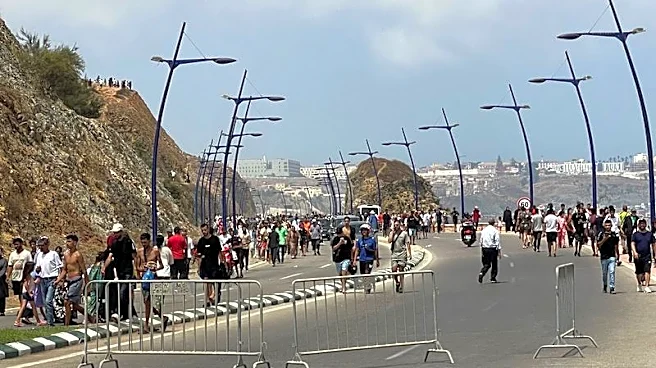
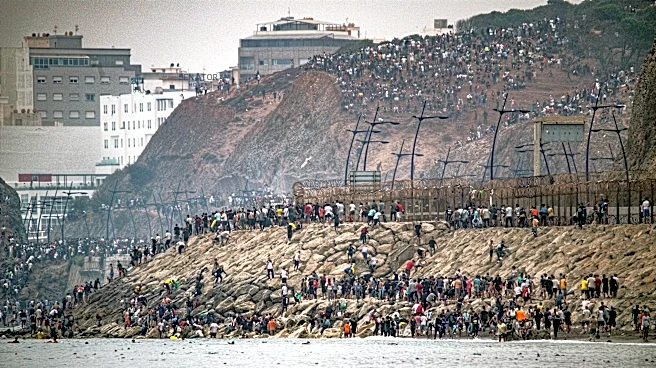
Spain has successfully stopped migrant crossings into its North African territory of Ceuta after a massive surge of around 60,000 people from Morocco. The Spanish government has installed a 500-meter floating barrier to prevent further crossings. The recent
influx resulted in at least 67 deaths, with many migrants driven by economic hardship and misinformation on social media. The situation has prompted calls for an emergency EU meeting to address the crisis and its implications for EU migration policies. Spain has emphasized that those who entered Ceuta cannot travel onwards to mainland Spain or the Schengen zone.
Why It's Important?
The incident in Ceuta highlights the ongoing challenges faced by the EU in managing migration and border security. The crisis has exposed divisions within the EU, with some member states calling for stricter measures and others advocating for more open policies. Spain's response, including the installation of a floating barrier, reflects the complexity of balancing humanitarian concerns with national security. The situation also underscores the need for a coordinated EU approach to migration, as well as the potential impact on Spain's relations with other EU countries and Morocco.
What's Next?
A high-level crisis meeting of EU officials is scheduled to address the situation in Ceuta. The outcome of this meeting could influence future EU migration policies and Spain's role within the Schengen area. Additionally, the crisis may prompt further discussions on the EU's external border policies and the need for a unified approach to migration challenges. Spain's Prime Minister Pedro Sánchez has emphasized the importance of cooperation with Morocco to manage the situation effectively.