







What's Happening?
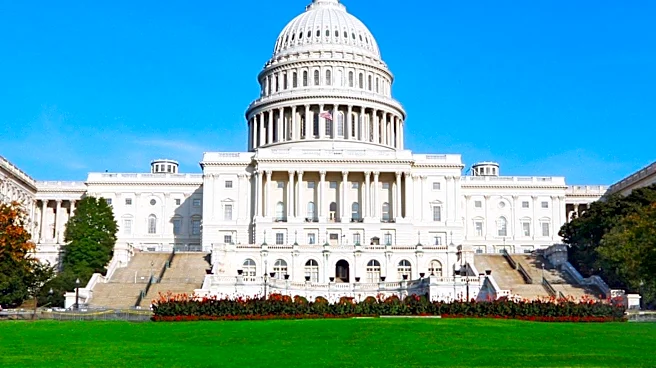
The U.S. House of Representatives has passed H.R. 6893, the Chesapeake Bay Watershed Advancement for Training, Education, Restoration, and Science (WATERS) Act. This bipartisan legislation was co-led by Representatives Bobby Scott (VA-03), Rob Wittman
(VA-01), Jen Kiggans (VA-02), and Sarah Elfreth (MD-03). The bill aims to reauthorize programs managed by the National Oceanic and Atmospheric Administration’s (NOAA) Chesapeake Bay Office. These programs are crucial for the restoration, monitoring, and educational initiatives within the Chesapeake Bay watershed. Specifically, the WATERS Act supports Bay restoration efforts, provides essential water-quality and scientific data, and funds educational programs like the Chesapeake Bay Watershed Education and Training (B-WET) program, which would be authorized for the first time under this legislation. The bill now moves to the United States Senate for consideration.
Why It's Important?
The passage of the Chesapeake Bay WATERS Act is significant for the ecological health and economic vitality of the Chesapeake Bay region. The Chesapeake Bay is the largest estuary in the United States and a critical natural resource, supporting diverse ecosystems, commercial fisheries, and recreational activities. Reauthorizing NOAA's programs ensures continued federal support for vital restoration efforts that combat pollution, protect habitats, and improve water quality. These efforts have direct impacts on local economies, particularly those reliant on fishing, tourism, and outdoor recreation. Furthermore, the authorization of the B-WET program underscores the importance of environmental education in fostering stewardship among future generations. The bipartisan nature of the bill highlights a shared commitment across political lines to preserve this national treasure, demonstrating that environmental conservation can be a unifying issue in Congress.
What's Next?
Following its passage in the House, the Chesapeake Bay WATERS Act now awaits consideration in the United States Senate. Companion legislation has already been introduced in the Senate, suggesting a potential path forward for its eventual enactment into law. Advocates, including the bill's co-sponsors like Congressman Rob Wittman, have expressed their commitment to championing the legislation as it moves through the Senate. If passed by the Senate and signed into law, the Act will provide renewed and stable funding for NOAA's Chesapeake Bay programs, allowing for the continuation and expansion of critical restoration, monitoring, and educational initiatives. This would ensure long-term federal commitment to the health of the Chesapeake Bay and its surrounding watershed.
Beyond the Headlines
The Chesapeake Bay WATERS Act represents more than just a reauthorization of federal programs; it symbolizes a sustained commitment to environmental stewardship in a region facing significant ecological challenges. The Bay's health is a bellwether for broader environmental issues, including nutrient pollution, habitat loss, and the impacts of climate change. The legislation's focus on science and education underscores the understanding that effective conservation requires both robust data collection and public engagement. The bipartisan support for the bill also reflects a growing recognition that environmental protection is not solely an ecological issue but also an economic and social one, impacting communities, industries, and quality of life. This act could serve as a model for collaborative, science-based approaches to environmental restoration in other critical U.S. watersheds.