







What's Happening?
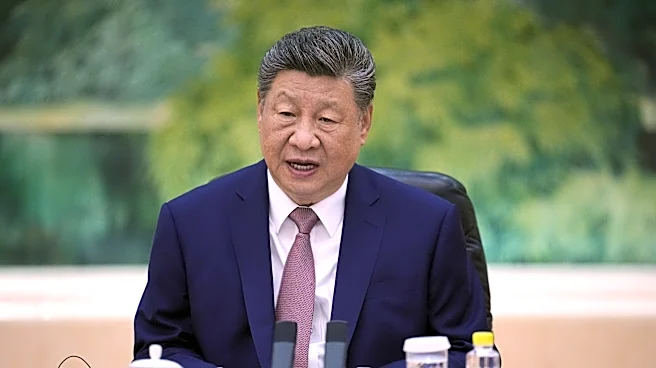
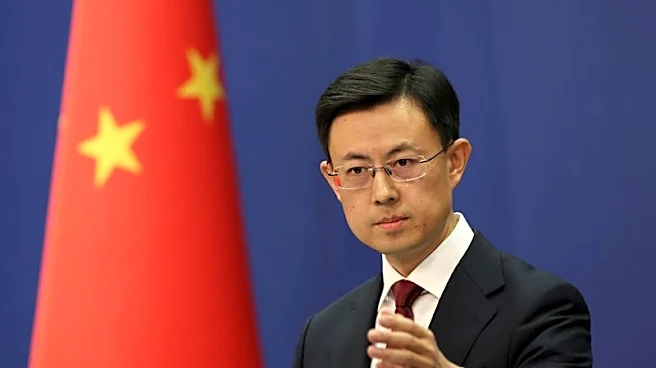
China's Foreign Ministry has denied claims made by President Trump that Beijing agreed not to supply weapons to Iran. The ministry labeled these claims as 'purely fabricated' and warned of potential countermeasures if the U.S. uses these allegations to justify
new tariffs. President Trump had stated that Chinese President Xi Jinping assured him in a letter that China would not arm Iran, framing this as a diplomatic success. However, China has neither confirmed the exchange of letters nor acknowledged any such agreement. The situation arises amid ongoing tensions related to U.S.-Iran relations and China's strategic interests in the region.
Why It's Important?
This denial from China highlights the complexities of U.S.-China relations, particularly in the context of Middle Eastern geopolitics. The allegations and subsequent denial could exacerbate trade tensions between the two countries, especially if the U.S. considers imposing tariffs based on these claims. The situation also reflects the broader strategic maneuvering by global powers in the Middle East, where military and economic interests often intersect. The potential for increased tariffs could impact global markets and trade dynamics, affecting industries reliant on U.S.-China trade.
What's Next?
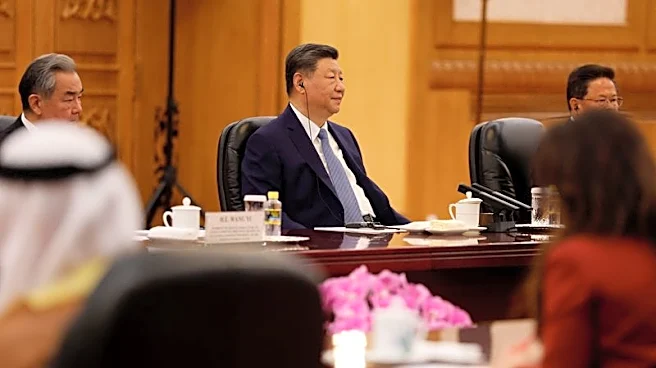
The U.S. may need to reassess its diplomatic approach with China, particularly in light of the upcoming bilateral summit. Both nations might engage in further diplomatic discussions to clarify positions and avoid escalation. The international community will likely monitor the situation closely, given its implications for global trade and regional stability in the Middle East. Any new tariffs or retaliatory measures could have significant economic repercussions, prompting businesses and investors to adjust their strategies accordingly.