
What's Happening?
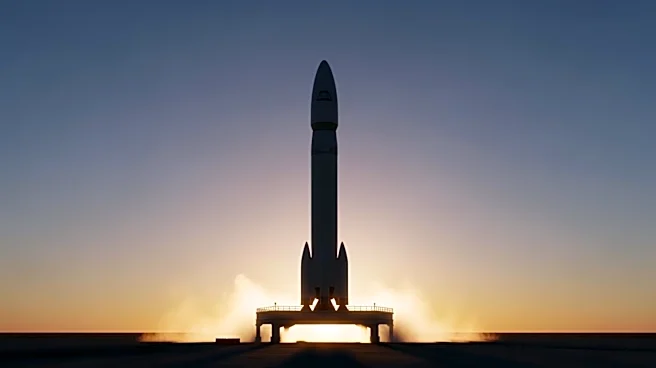
SpaceX is set to launch its upgraded Starship rocket, the largest the company has ever developed, after a seven-month break since its last test flight. The Starship Version 3, which stands at 407 feet
tall, is scheduled for its 12th flight on May 19, with the launch window opening at 6:30 p.m. EST. The launch will take place from SpaceX's Starbase headquarters in Texas, utilizing a newly designed launch pad. This version of the Starship features significant redesigns, including upgraded Super Heavy boosters and raptor engines, aimed at providing more thrust and carrying more fuel for extended missions. The primary goal of this flight test is to demonstrate the new components in a flight environment, with the ultimate aim of achieving full and rapid reuse of the spacecraft. This launch is part of SpaceX's broader vision to use the Starship for missions to the moon and Mars, aligning with NASA's Artemis program.
Why It's Important?
The upcoming launch of the Starship Version 3 is a critical step for SpaceX as it continues to develop its capabilities for long-distance space travel. The enhancements in the rocket's design are intended to improve its performance and reliability, which are essential for future missions to the moon and Mars. This launch also represents a significant milestone in SpaceX's efforts to create a fully reusable spacecraft, which could drastically reduce the cost of space travel and make it more accessible. The success of this mission could bolster SpaceX's position as a leader in the aerospace industry and support NASA's goals for lunar exploration under the Artemis program. Additionally, the advancements in rocket technology demonstrated by this launch could have broader implications for the commercial space industry, potentially leading to new opportunities for space exploration and satellite deployment.
What's Next?
Following the launch, SpaceX will likely analyze the performance of the Starship Version 3 to assess the effectiveness of the new design features. If successful, this test flight could pave the way for more ambitious missions, including potential crewed flights to the moon and Mars. SpaceX's continued development of the Starship is expected to attract attention from both government and private sector stakeholders interested in space exploration. Future launches will likely focus on further testing and refining the spacecraft's capabilities, with the goal of achieving full operational status for long-distance missions. The outcome of this launch could also influence NASA's planning and timelines for the Artemis program, as well as impact the broader space exploration strategies of other countries and companies.