






What's Happening?
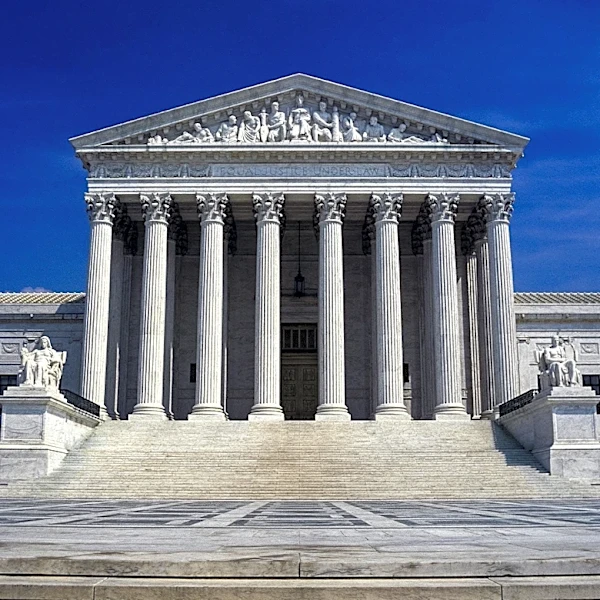
Chief Justice John G. Roberts Jr. has been instrumental in steering the Supreme Court towards a constitutional vision that significantly impacts the First Amendment, the equal-protection clause, and the balance of powers. His leadership has been marked
by decisions such as Citizens United v. FEC, which altered campaign finance laws by allowing unlimited corporate election spending. Recently, the Court has further enabled national parties to engage in big-dollar spending, affecting the political landscape by strengthening party leadership over insurgent candidates. Additionally, the Court's interpretation of the equal-protection clause has shifted towards a 'colorblind' approach, impacting minority voting rights and gerrymandering. The Roberts Court has also expanded the unitary-executive theory, granting the president greater control over federal officers, aligning with President Trump's preferences.
Why It's Important?
The Supreme Court's direction under Chief Justice Roberts has profound implications for U.S. democracy and governance. By transforming the First Amendment and equal-protection clause, the Court is reshaping political and electoral processes, potentially marginalizing minority voices and enhancing the influence of wealthy donors. The unitary-executive theory's expansion could centralize power in the presidency, affecting the balance of powers. These changes may lead to a political environment where elections are less representative, and policy decisions are increasingly influenced by financial power rather than democratic processes. The Court's decisions reflect a long-term constitutional project that could redefine American democracy and governance for decades.
What's Next?
Future Supreme Court decisions will likely continue to reflect Chief Justice Roberts' constitutional vision, potentially further altering the legal landscape in areas such as campaign finance, voting rights, and executive power. The Court's approach may face challenges from political leaders, civil rights groups, and the public, particularly if perceived as undermining democratic principles. Legislative responses could emerge to counteract the Court's decisions, though such efforts may face significant hurdles. The ongoing evolution of the Court's constitutional project will be closely watched by stakeholders across the political spectrum.
Beyond the Headlines
The Supreme Court's trajectory under Chief Justice Roberts raises ethical and cultural questions about the role of money in politics and the balance between individual rights and governmental power. The Court's decisions may contribute to a broader societal debate about the nature of democracy and equality in the United States. As the Court continues to shape constitutional interpretation, its impact on American society and governance will be a critical area of analysis and discussion.