


What's Happening?
Scientists in Bolivia have uncovered a remarkable 18,000 dinosaur footprints and swim tracks at the Carreras Pampa site in Torotoro National Park. This discovery sets a new global benchmark for a single tracksite. The site, once an ancient coastline and travel
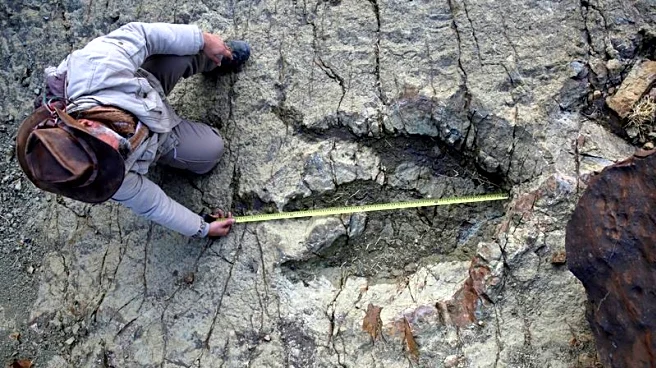
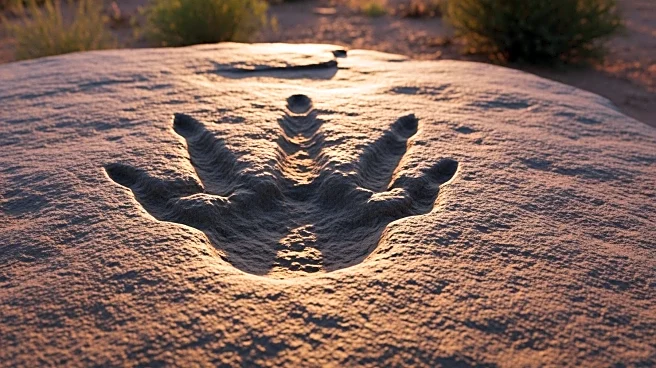
corridor, features 16,600 footprints attributed to theropods, which are bipedal, three-toed dinosaurs from the late Cretaceous period. The footprints vary in size, with some as small as four inches, possibly indicating juvenile dinosaurs, while others exceed 12 inches. The site covers over 80,000 square feet and required significant clearing of debris and sediment to reveal the fossilized imprints. The area is unique not only for the number of tracks but also for the diversity of locomotive behaviors it preserves, including walking, running, swimming, tail-dragging, and sharp turning.
Why It's Important?
This discovery is significant as it provides a comprehensive view of dinosaur behavior and movement patterns during the late Cretaceous period. The Carreras Pampa site is now recognized as the location with the most dinosaur tracks globally, offering valuable insights into the ecology and environment of that era. The presence of numerous swim tracks, characterized by straight or comma-shaped grooves, adds to the understanding of theropod behavior, suggesting they were capable of swimming. This site could potentially connect to a larger dinosaur highway across Bolivia, Argentina, and Peru, enhancing the understanding of dinosaur migration and interaction across South America. The findings contribute to the broader field of paleontology by offering a detailed snapshot of dinosaur life and their interactions with the environment.
What's Next?
Further research and excavation at the Carreras Pampa site are likely to continue, as scientists aim to uncover more about the diversity and behavior of dinosaurs in this region. The site may attract international attention and collaboration, potentially leading to new discoveries about dinosaur migration patterns and their ecological impact. Additionally, the site could become a significant tourist attraction, boosting local economies and increasing public interest in paleontology. Preservation efforts will be crucial to protect the site from environmental and human-induced damage, ensuring that it remains a valuable resource for future scientific study.