




What's Happening?
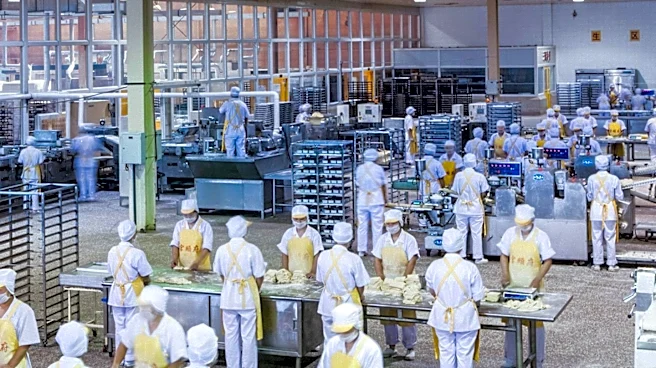
The Pangaia Skills Development Centre on Bazaruto Island, Mozambique, is transforming lives by offering bakery and pastry training to young islanders. Until 2023, fresh bread was unavailable on the island, but now, thanks to the center, young people are
running their own bakery, producing bread, cakes, and other baked goods daily. Recelia Zivane, who now manages the bakery, transitioned from a precarious fishing livelihood to a stable income-generating role after receiving a training scholarship. She emphasizes that the program provides not just baking skills but also opportunities for income generation, skill development, and opening doors for others. The center, supported by African Parks, aims to reduce community dependence on unsustainable use of natural resources by providing alternative livelihood skills. In addition to bakery training, the center offers courses in welding, electrical installation, bricklaying, and motor mechanics, equipping over 100 young people annually with practical skills for a more promising future within their communities.
Why It's Important?
This initiative is crucial for several reasons. Firstly, it directly addresses economic instability and unemployment among youth in the Bazaruto Archipelago, providing tangible skills that lead to self-sufficiency and entrepreneurship. By creating local businesses like the bakery, the program stimulates the local economy and fulfills previously unmet community needs. Secondly, it plays a vital role in conservation efforts by offering alternative livelihoods that reduce pressure on marine resources, which are often overexploited due to a lack of other income opportunities. This approach demonstrates how community development and environmental protection can be mutually reinforcing. Thirdly, the program empowers marginalized groups, such as women, by enabling them to enter traditionally male-dominated technical fields, as highlighted by Amelia Joaquim, an electrical installation trainee. This fosters gender equality and broadens career prospects for all island residents, building more resilient and equitable communities.
What's Next?
The Pangaia Skills Development Centre plans to continue expanding its vocational training offerings, with over 100 young people graduating annually from 14 specialities. Future developments may include further integration of sustainable practices within the training programs, such as using locally sourced ingredients for the bakery or promoting eco-friendly construction methods in trades like bricklaying. The success of the bakery could serve as a model for other small businesses on the island, potentially leading to the establishment of more community-run enterprises in various sectors. African Parks will likely continue to monitor the impact of these livelihood programs on both community well-being and conservation outcomes, potentially scaling up successful models to other protected areas. Continued investment in marketing and market research for artisans, as well as support for community farming groups, indicates a holistic approach to fostering long-term economic stability and food security on the islands.
Beyond the Headlines
The Pangaia Skills Development Centre's work extends beyond vocational training; it represents a paradigm shift in conservation strategy. By investing in human capital and economic empowerment, African Parks acknowledges that the well-being of local communities is intrinsically linked to the health of the ecosystem. This approach challenges traditional conservation models that often create friction between protected areas and local populations. The center fosters a sense of ownership and shared responsibility among islanders for their environment, as they become less reliant on unsustainable practices. Furthermore, the initiative addresses broader social issues such as gender inequality and lack of access to education, demonstrating how targeted skill development can be a powerful tool for social change. The transformation of individuals like Recelia Zivane and Amelia Joaquim illustrates the profound impact of providing opportunities, not just for economic gain, but for personal growth, confidence, and breaking down societal barriers, ultimately contributing to a more sustainable and equitable future for the region.