








What's Happening?
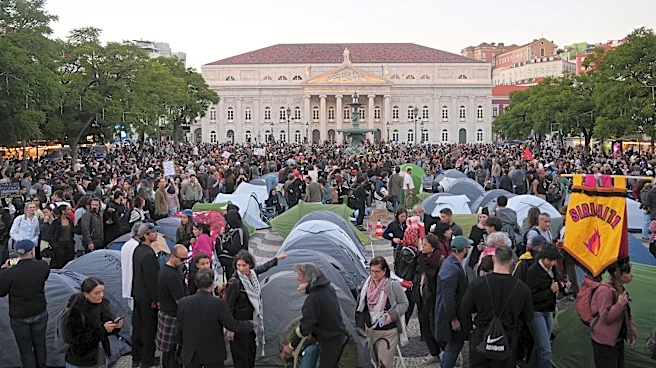
Gen Z, individuals born roughly between 1997 and 2012, are increasingly leading protests globally, driven by frustrations over economic inequality, lack of opportunity, and perceived governmental failures. Recent demonstrations across Europe, including
in Brussels, Milan, and Paris, have seen young people taking to the streets to voice concerns about rising prices, the cost of living, inadequate schooling facilities, and corruption. These protests, which have at times turned violent with property damage and clashes with authorities, reflect a generation feeling unheard and disillusioned with their future prospects. A European Union survey from 2025 indicated that 40% of 16-30-year-olds are concerned about rising prices and the cost of living, with young adults facing the highest risk of poverty or social exclusion.
Why It's Important?
The widespread engagement of Gen Z in protests signals a significant shift in political and social activism, indicating a growing dissatisfaction with current economic and governance structures. This generation's concerns about economic opportunity, housing, and the cost of living have profound implications for future policy-making and societal stability. The protests highlight a generational divide, with younger populations feeling burdened by the financial legacy of older generations and a lack of investment in their future. The potential for these movements to bring about political change, as seen in Serbia where student-led protests contributed to the toppling of a long-time leader, underscores their growing influence and the need for governments to address their grievances seriously. Failure to do so could lead to continued social unrest and political instability.
What's Next?
The ongoing protests suggest that Gen Z will continue to be a vocal force in demanding change, potentially influencing upcoming elections and policy debates. Governments and political leaders will likely face increasing pressure to address issues such as youth unemployment, affordable housing, and educational reform. The spread of these movements across different countries indicates a shared sense of grievance among young people, which could lead to more coordinated international activism. The challenge for authorities will be to engage constructively with these movements, moving beyond reactive measures to implement meaningful reforms that address the root causes of youth dissatisfaction. The experience in Serbia suggests that these protests can indeed lead to significant political shifts.
Beyond the Headlines
The rise of Gen Z activism points to deeper societal anxieties about intergenerational equity and the sustainability of current economic models. This generation, often characterized by its digital fluency and global interconnectedness, is leveraging social media and other platforms to organize and amplify their voices, creating a new paradigm for social movements. The protests also highlight a crisis of trust in established institutions and political processes, with young people feeling that their concerns are not being adequately represented or addressed. This could lead to a re-evaluation of democratic participation, the role of youth in governance, and the need for more inclusive decision-making processes that genuinely incorporate the perspectives and needs of younger generations.