



What's Happening?
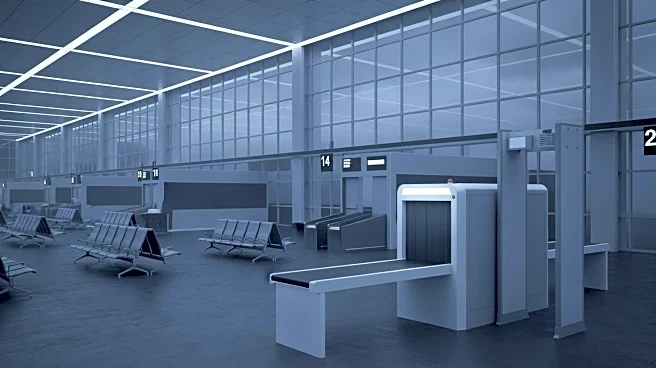
Republican and Democratic senators are expressing frustration over the ongoing impasse in funding the Department of Homeland Security (DHS), which has resulted in long lines at airports across the United States. The deadlock, now entering its fourth week,
stems from disagreements over funding for Immigration and Customs Enforcement (ICE) and Customs and Border Protection. Democrats are willing to fund parts of DHS but demand changes in ICE operations, which Republicans oppose. The standoff has led to a shortage of Transportation Security Administration screeners, causing significant delays at airports. Both parties have blocked each other's proposals to temporarily resolve the issue, with Democrats seeking to exclude ICE and Customs and Border Protection from funding, while Republicans insist on maintaining ICE's enforcement capabilities.
Why It's Important?
The funding impasse has significant implications for U.S. air travel and national security. The ongoing shutdown of DHS affects over 260,000 employees, many of whom are working without pay, and has led to operational challenges at airports, impacting travelers nationwide. The situation highlights the broader political divide over immigration enforcement policies under President Trump's administration. The deadlock also underscores the challenges in reaching bipartisan agreements on contentious issues, with potential economic repercussions due to travel delays. The U.S. Chamber of Commerce has urged Congress to resolve the funding issue to prevent further strain on the air travel system.
What's Next?
As the impasse continues, both parties are under pressure to find a resolution. Senate Majority Leader John Thune has indicated that Republicans have made overtures to Democrats for a funding bill, but negotiations have stalled. The situation may prompt further discussions, with potential involvement from the White House to facilitate an agreement. The ongoing delays at airports could increase public pressure on lawmakers to reach a compromise. Additionally, the economic impact of prolonged travel disruptions may drive business groups to advocate more strongly for a resolution.