
What's Happening?
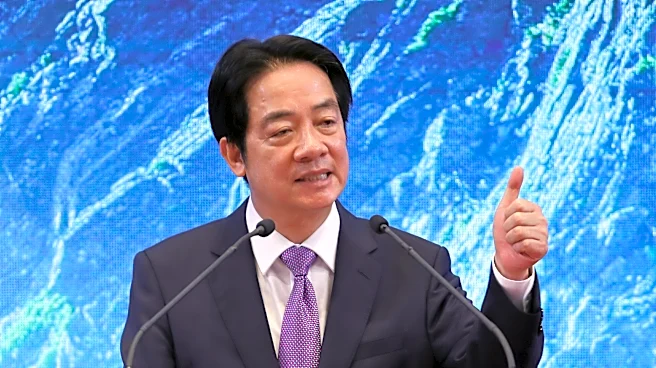
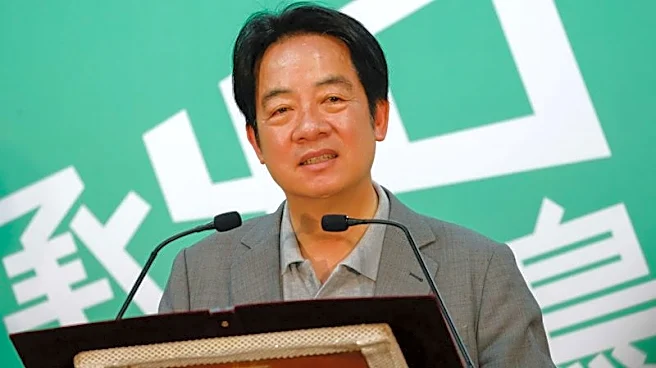
President Donald Trump has announced his intention to speak with Taiwan's President Lai Ching-te, marking a significant departure from longstanding U.S. diplomatic protocol. This move comes amid discussions
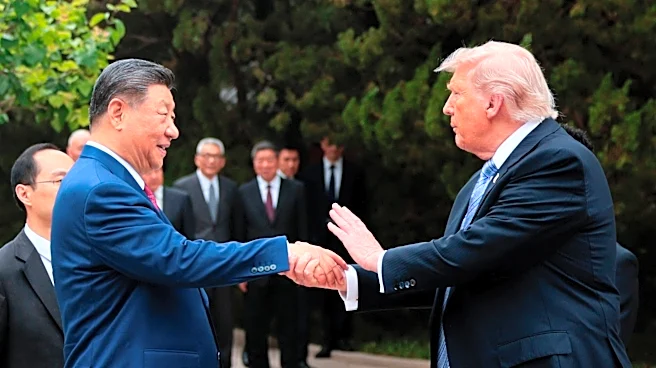
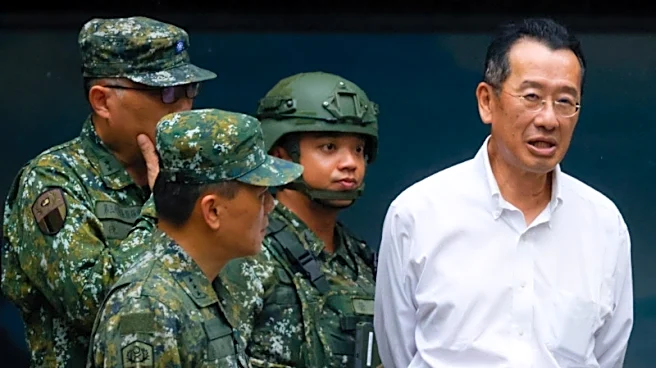
of a $14 billion arms sales package to Taiwan, which Congress approved earlier this year. The United States, under the Taiwan Relations Act of 1979, is committed to providing Taiwan with defensive capabilities, despite not having formal diplomatic ties. China's government has consistently opposed U.S. arms sales and official exchanges with Taiwan, urging the U.S. to handle the Taiwan issue with caution. During a recent visit to China, President Trump discussed Taiwan with Chinese President Xi Jinping, who warned of potential conflict if the issue is not managed carefully.
Why It's Important?
The potential conversation between President Trump and Taiwan's President Lai could significantly impact U.S.-China relations. China views Taiwan as a part of its territory and has not ruled out the use of force to achieve reunification. The U.S. has historically supported Taiwan's defense, which has been a point of contention with China. A direct conversation between the U.S. and Taiwanese leaders could be perceived by China as a challenge to its sovereignty claims, potentially escalating tensions. The arms sales package, which includes advanced military equipment, is seen as crucial for Taiwan's defense against increasing Chinese military pressure. This development could influence U.S. foreign policy and its strategic positioning in the Indo-Pacific region.
What's Next?
While no specific date has been set for the call between President Trump and President Lai, the announcement has already stirred diplomatic waters. The U.S. administration may face pressure from both domestic and international stakeholders regarding its Taiwan policy. China is likely to respond with diplomatic protests and could take measures to express its displeasure, such as delaying diplomatic engagements or increasing military activities near Taiwan. The outcome of the arms sales discussions will also be closely watched, as it could set a precedent for future U.S.-Taiwan relations and impact the broader geopolitical landscape in Asia.