






What's Happening?
Taiwan's Coast Guard Administration utilized its National Day parade on October 10 in Taipei to display an evolving air-sea unmanned network. This network integrates U.S. systems, co-development efforts with Taiwan's defense research establishment, and
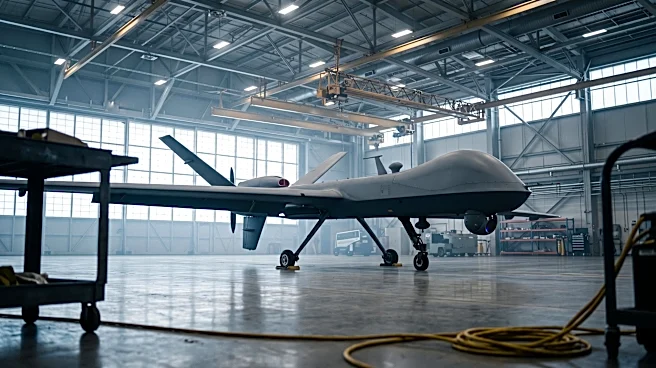
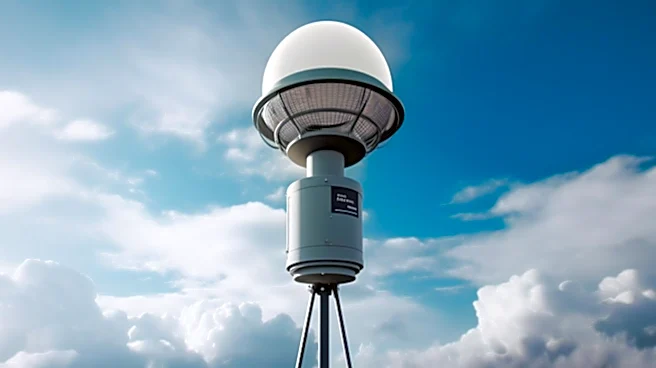
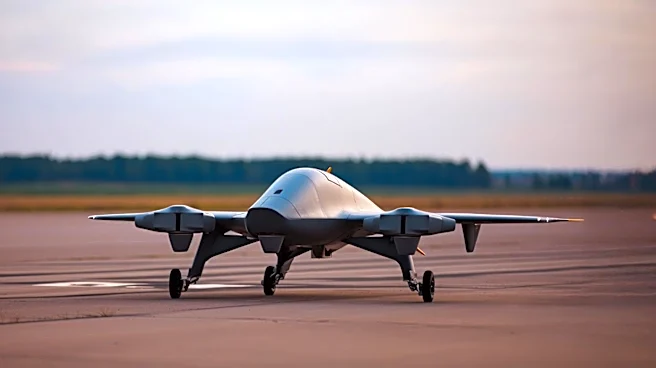
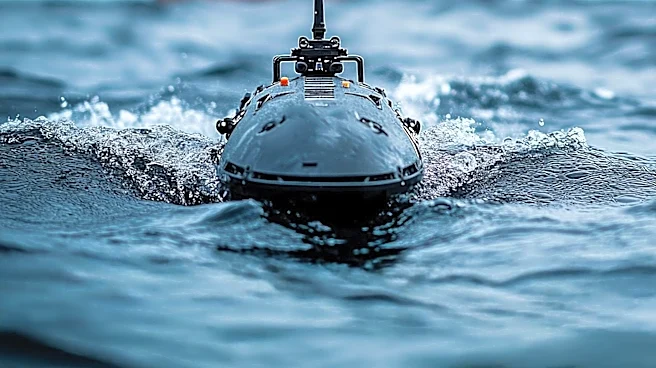
a strategic shift from traditional hull-centric patrol methods to networked maritime awareness. The parade featured the largest Coast Guard contingent in the service's history, organized into three echelons: national security, law enforcement, and public safety. Key components showcased included two special-operations assault boats, a MARTAC unmanned surface vessel (USV), an AeroVironment Jump 20 vertical-takeoff drone, and vehicle-mounted radar and infrared thermal-imaging units. A rehearsal on October 6 provided the first public viewing of the Jump 20 alongside a MARTAC M18 drone boat. Further demonstrations at Taipei Harbor on October 7 highlighted the coordination between MARTAC’s T-24 drone vessel and Shield AI’s V-BAT VTOL drone, emphasizing their combined capabilities for land-sea defense.
Why It's Important?
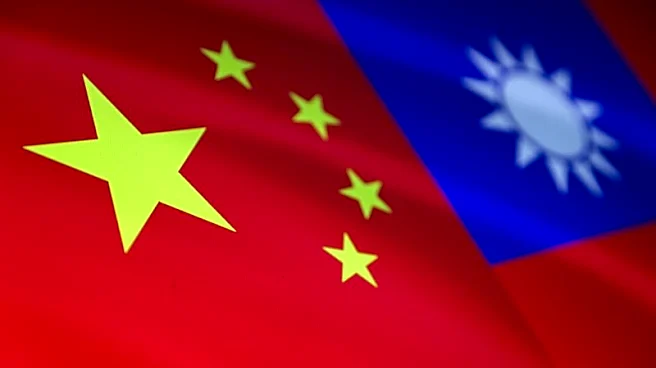
This public display signifies a critical advancement in Taiwan's defense strategy, particularly in addressing 'gray-zone' pressure from Beijing, which often involves coast guard, maritime militia, and law enforcement activities. By deploying a sensor-rich, long-endurance unmanned system, Taiwan's Coast Guard can enhance its persistent surveillance capabilities, providing valuable data for the broader defense enterprise. The emphasis on a 'mesh' network, rather than individual platforms, underscores a sophisticated approach to maritime autonomy, integrating sensing, command, and both manned and unmanned assets. This strategy aims to create a cooperative strike and intelligence, surveillance, and reconnaissance (ISR) network that offers all-weather maritime coverage without blind spots. Furthermore, the co-development aspect, exemplified by the partnership between Taiwan's National Chung-Shan Institute of Science and Technology (NCSIST) and U.S. companies like MARTAC, indicates a move towards local adaptation, sustainment, and production of defense technologies. This reduces reliance on transpacific supply lines, enhancing Taiwan's ability to build, repair, and regenerate its forces domestically during a crisis.
What's Next?
The unmanned systems are slated for integration into the Coast Guard's patrol fleets for routine operations around Taiwan. This integration will enable these systems to work in conjunction with patrol vessels to form a comprehensive maritime surveillance and response network. The ongoing training for the MARTAC M18 USV suggests it will soon enter frontline service, further bolstering the Coast Guard's operational capabilities. The continued collaboration between NCSIST and U.S. firms like MARTAC, focusing on AI tracking for drone boats, autonomous interception, and fleet coordination, indicates future advancements in these unmanned technologies. The arrival of the first batch of V-BATs bought by the Coast Guard also points to a rapid deployment and expansion of these assets. This phased transformation, encompassing fleet expansion, upgraded ISR, and the integration of unmanned vehicles and AI, will likely lead to a more resilient and autonomously capable Taiwanese maritime defense force.
Beyond the Headlines
The strategic shift towards an unmanned, networked maritime defense system has profound implications for regional security dynamics. It represents a proactive measure by Taiwan to counter evolving threats and maintain situational awareness in its territorial waters. The emphasis on co-development and local production of defense technologies could foster a more robust domestic defense industry, reducing external dependencies and enhancing national sovereignty in defense matters. This approach also highlights a broader trend in modern warfare, where unmanned systems and artificial intelligence play an increasingly central role in intelligence gathering, surveillance, and potential conflict scenarios. The 'air-sea integration' slogan reflects a comprehensive vision for defense that leverages technological innovation to create a more agile and effective force. This development could also serve as a model for other nations facing similar geopolitical pressures, demonstrating how advanced technology and strategic partnerships can enhance defensive capabilities in complex maritime environments.