








What's Happening?
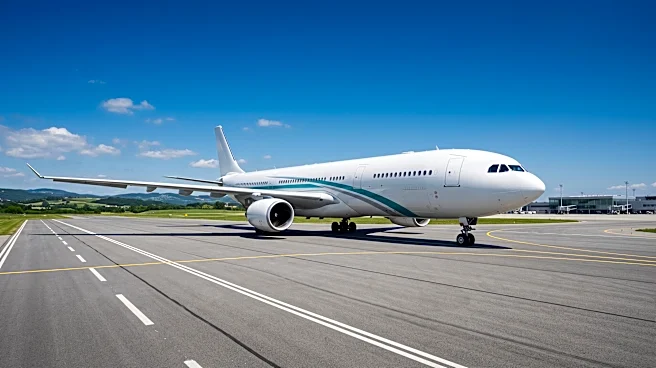
Air China has launched a new flight service connecting Beijing, Bucharest, and Zagreb. This route, which will operate three times weekly on Mondays, Wednesdays, and Fridays using an Airbus A330-200 aircraft, marks the resumption of a direct air connection
between China and Romania after a two-decade suspension. The service aims to enhance connectivity and foster increased exchanges in tourism, trade, investment, culture, education, and people-to-people contacts between China and the respective European nations. Dignitaries, including the Chinese Ambassador to Croatia, H.E. Qi Qianjin, and State Secretary at the Ministry of Tourism and Sport of Croatia, Monika Udovičić, attended the inauguration ceremony at Zagreb Airport, highlighting the significance of this new air link for bilateral relations and economic development.
Why It's Important?
The inauguration of this flight service is important for several reasons. For Romania and Croatia, it provides a direct link to the Chinese market, which is crucial for boosting tourism, trade, and investment. Chinese visitors are a significant market for Croatia's tourism sector, and improved accessibility is expected to drive continued growth. Economically, the route facilitates stronger commercial ties and investment opportunities, contributing to long-term economic development in the region. Culturally, it promotes greater understanding and exchange between the peoples of China, Romania, and Croatia. The renewed connectivity also strengthens Zagreb Airport's role as a key gateway to Europe, enhancing its position in the broader aviation network linking Asia and Europe.
What's Next?
The new flight service is expected to lead to an increase in tourism flows from China to Romania and Croatia, as well as facilitate business travel and investment. Both countries anticipate a boost in their respective tourism sectors and stronger economic partnerships with China. The increased connectivity could also pave the way for further cultural and educational exchanges. Stakeholders will likely monitor the impact of this route on trade volumes, tourist arrivals, and overall bilateral relations to assess its full potential and consider future expansions or additional services. The success of this route could encourage other airlines to explore similar direct connections, further integrating the regions.
Beyond the Headlines
Beyond the immediate economic and tourism benefits, this new air route signifies a broader strategic effort by China to strengthen its ties with Central and Eastern European countries. By enhancing connectivity, China is not only facilitating trade and tourism but also extending its influence and fostering goodwill in the region. This initiative aligns with China's 'Belt and Road' initiative, which seeks to build infrastructure and strengthen economic links across continents. The emphasis on people-to-people exchanges also suggests a long-term strategy to cultivate deeper cultural understanding and diplomatic relations, potentially leading to increased political alignment and cooperation on various international issues. This move could also be seen as a way to diversify China's economic partnerships and reduce reliance on traditional Western markets.