



What's Happening?
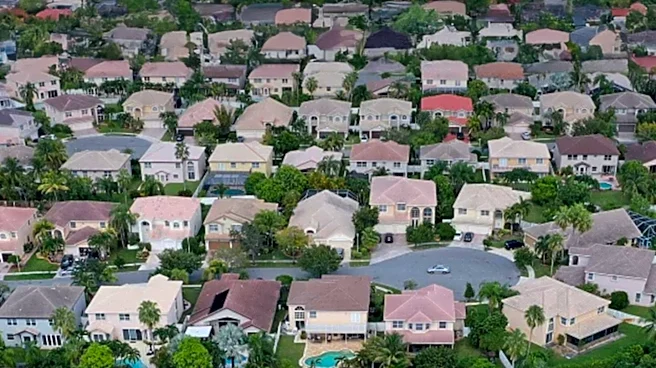
An Austin homeowner, Tracy Gartenmann, faced the risk of losing her home insurance after aerial photographs showed trees near her roof. Travelers Insurance used these images to determine that her policy would not be renewed unless the trees were trimmed.
Gartenmann spent $3,000 to prune the trees and successfully renewed her policy just before it expired. This case highlights a growing trend where insurance companies use aerial imagery to assess properties, leading to nonrenewals based on perceived risks. The Texas Department of Insurance has received numerous complaints from homeowners about similar issues, with some questioning the accuracy and fairness of these assessments.
Why It's Important?
The use of aerial imagery by insurance companies represents a shift towards technology-driven assessments, which can streamline processes but also raise concerns about accuracy and privacy. Homeowners may face unexpected costs and challenges in maintaining coverage, impacting their financial stability and property security. This trend reflects broader changes in the insurance industry as companies seek to manage risks associated with extreme weather and property damage more efficiently. However, it also underscores the need for regulatory oversight to ensure fair practices and protect consumer rights.
What's Next?
As the use of aerial imagery in insurance assessments becomes more prevalent, regulatory bodies may need to establish guidelines to address privacy concerns and ensure accuracy. Homeowners and consumer advocacy groups might push for greater transparency and accountability from insurance companies. Additionally, there could be increased demand for legislative action to regulate the use of technology in insurance practices, balancing efficiency with consumer protection. The industry may also explore alternative methods to assess property risks that incorporate both technological and human elements.
Beyond the Headlines
The reliance on aerial imagery raises ethical questions about surveillance and the balance between technological advancement and individual privacy. It also highlights the potential for technology to disrupt traditional industries, prompting discussions about the role of human judgment in decision-making processes. As technology continues to evolve, industries will need to navigate these challenges while maintaining trust and fairness in their operations.