










What's Happening?
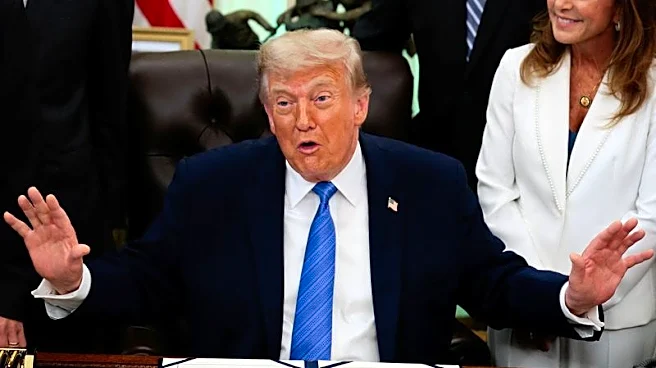
President Trump's claims of economic success are under scrutiny as new data reveals minimal real wage growth amid rising inflation. Since Trump's return to office in January 2025, inflation-adjusted wages for most workers have increased by only 0.1%,
despite nominal wage gains. The rapid inflation, driven by energy prices and the Iran conflict, has negated wage increases, leaving many Americans financially stressed. Recent polls indicate widespread disapproval of Trump's handling of the cost of living, with many Americans finding their local cost of living unaffordable.
Why It's Important?
The economic challenges highlighted by the data have significant implications for the U.S. economy and public sentiment. The stagnation of real wages amidst rising inflation affects consumer purchasing power and overall economic stability. The discontent reflected in public opinion polls could influence political dynamics and policy decisions. The administration's economic policies and their impact on inflation and wages will be critical factors in shaping public perception and future electoral outcomes.
What's Next?
The administration may need to address inflationary pressures and wage stagnation to improve economic conditions and public approval. Potential policy responses could include measures to stabilize energy prices and support wage growth. The ongoing conflict in Iran and its impact on global oil markets will continue to be a key factor influencing economic conditions. Stakeholders, including policymakers and businesses, will need to navigate these challenges to ensure economic resilience.