







What's Happening?
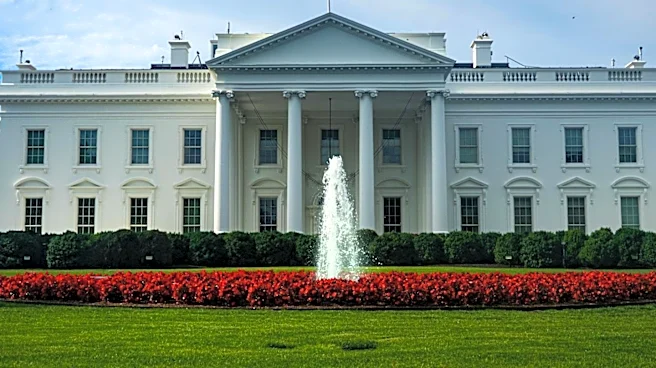
The White House has reportedly contacted the Defense POW/MIA Accounting Agency (DPAA) to assess its capabilities for recovering the remains of U.S. troops from North Korea. This inquiry comes as President Trump has expressed interest in resuming summitry
with North Korean leader Kim Jong-un. Kelly McKeague, director of the DPAA, stated that his agency has informed both the White House and the Defense Department of its readiness for engagement with Pyongyang regarding the recovery of U.S. service members killed during the 1950-53 Korean War. McKeague highlighted that the DPAA has suggested two primary avenues for cooperation: North Korea turning over remains it currently holds and the resumption of joint field missions within North Korea, which last occurred in 2005. The DPAA envisions a program involving two teams operating at North Korean sites, Unsan and Chosin, four times a year for 42-day periods for recovery efforts. This development suggests the Trump administration is seriously considering re-engagement with Pyongyang, potentially leading to a meeting between President Trump and Kim Jong-un later this year, possibly during an Asia-Pacific Economic Cooperation summit.
Why It's Important?
The potential resumption of U.S. troop remains recovery efforts from North Korea carries significant humanitarian and diplomatic importance. For the families of the approximately 5,300 U.S. service members still unaccounted for in North Korea, this initiative offers renewed hope for closure. From a diplomatic perspective, cooperation on this humanitarian issue could serve as a crucial 'tool of engagement' between the U.S. and North Korea, even amidst ongoing geopolitical tensions. Such collaboration could establish a channel for communication and build a degree of trust, potentially paving the way for broader discussions on denuclearization and regional stability. The DPAA director emphasized that this mission is primarily humanitarian but also functions as a diplomatic tool, allowing the U.S. to work with a former adversary. The success of these efforts could demonstrate a tangible benefit of dialogue, influencing future U.S. foreign policy approaches to complex international relations.
What's Next?
The immediate next step involves the presidential commission, established by President Trump, to recommend how a U.S. Space Academy would operate. This commission has 120 days to provide recommendations on the academy's structure, location, graduate obligations, and necessary congressional actions. Concurrently, the White House's inquiry to the DPAA signals potential diplomatic overtures towards North Korea. If President Trump proceeds with a summit with Kim Jong-un, the recovery of U.S. troop remains could be a key agenda item. The DPAA has communicated its readiness to resume joint excavation efforts, which would require an agreement from North Korea. The outcome of these discussions could lead to the deployment of DPAA teams to North Korea for recovery operations, potentially involving multiple 42-day missions annually. The broader implications include the possibility of renewed U.S.-North Korea dialogue, which could impact regional security dynamics and the denuclearization process.
Beyond the Headlines
Beyond the immediate humanitarian aspect of recovering fallen service members, the potential for renewed U.S.-North Korea engagement through this channel highlights a less obvious but critical dimension of diplomacy: using shared humanitarian goals to bridge political divides. This approach suggests that even in highly adversarial relationships, common ground can be found in areas like accounting for missing personnel. Such initiatives can foster a degree of goodwill and provide a practical, non-confrontational avenue for communication, which might be otherwise difficult to establish. The DPAA's role as a 'tool of diplomacy' underscores the idea that humanitarian missions can serve as soft power, subtly influencing international relations and potentially de-escalating tensions. This strategy could set a precedent for future engagements with other challenging nations, demonstrating that even deeply entrenched conflicts can have humanitarian off-ramps that lead to broader diplomatic opportunities.