






What's Happening?
New Jersey State Senator Bob Smith has introduced Senate Bill 4656, known as the 'Protect our Health from Plastics Act,' which aims to implement stringent packaging source reduction mandates and ban certain toxic substances in plastic packaging. The bill,
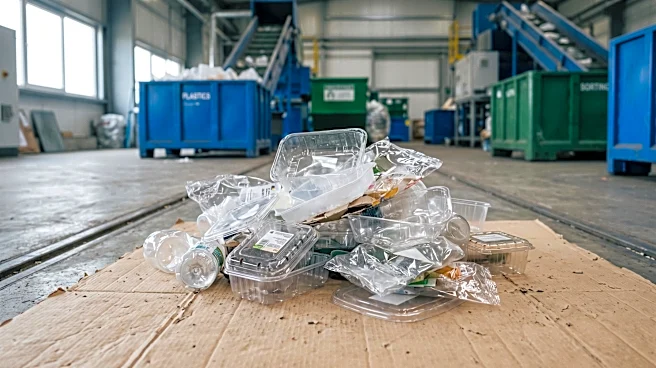
referred to the state's Senate Environment and Energy Committee, requires plastic packaging producers to register with the state, report on plastic packaging amounts, pay fees, and meet aggressive source reduction targets. Specifically, individual producers would need to achieve a 50% reduction in plastic packaging within 10 years of registration, with incremental targets every two years. Unlike California's similar law, New Jersey's proposed targets are individual rather than collective, potentially posing a significant challenge for producers. Additionally, SB 4656 prohibits the use of certain toxic substances, including PVC, in plastic packaging and mandates the Department of Environmental Protection (DEP) to identify and ban at least 10 more toxic substances every three years, starting five years after the bill's passage. The bill also directs the Attorney General's office to establish an independent enforcement office with the power to levy substantial penalties for violations.
Why It's Important?
This proposed legislation represents a significant step in New Jersey's efforts to combat plastic pollution and its associated health impacts, potentially setting a new precedent for state-level environmental regulations. The individual source reduction targets are particularly noteworthy, as they place direct responsibility on each producer, which could lead to more rapid and innovative changes in packaging design and material use. The ban on specific toxic substances and the mandate for future prohibitions address critical public health and environmental concerns related to chemical contamination. For businesses, especially those in the packaging and consumer goods sectors, this bill could necessitate substantial operational changes, investment in new materials, and redesign of product packaging. The potential for millions of dollars in penalties for non-compliance underscores the seriousness of the proposed regulations. If passed, SB 4656 could influence other states to adopt similar, more aggressive measures, further shaping the national landscape of packaging policy and sustainability efforts.
What's Next?
SB 4656 has until January 2028 to pass through the legislative process, as New Jersey operates on a two-year legislative cycle. Given that its sponsor chairs the Environment and Energy Committee, the bill may have a stronger path forward. Producers and stakeholders will closely monitor its progress, as the bill's provisions, particularly the individual source reduction mandates, could be cumbersome. The bill's implementation would require producers to adapt their packaging strategies significantly, potentially leading to a shift towards more sustainable and less toxic materials. The establishment of an independent enforcement office suggests a robust regulatory environment. Public comments and industry lobbying efforts are expected to continue as the bill moves through committees and potentially towards a vote. The outcome in New Jersey could also serve as a case study for other states considering similar, more stringent packaging regulations.
Beyond the Headlines
The 'Protect our Health from Plastics Act' in New Jersey highlights a growing societal and governmental recognition of the urgent need to address plastic pollution and chemical contamination. Beyond the immediate economic and regulatory impacts, this bill touches upon deeper ethical and public health considerations. It reflects a shift towards holding producers more accountable for the entire lifecycle of their products, moving beyond traditional waste management to emphasize source reduction and the elimination of harmful substances. This could foster a more circular economy model, where materials are kept in use for longer and designed to be inherently safer. The focus on individual producer responsibility, while challenging for businesses, could also spur greater innovation in sustainable packaging solutions. Furthermore, the bill's provisions regarding toxic substances underscore the increasing awareness of the long-term health effects of chemicals in everyday products, potentially leading to broader societal demands for safer materials and greater transparency from manufacturers.