



What's Happening?
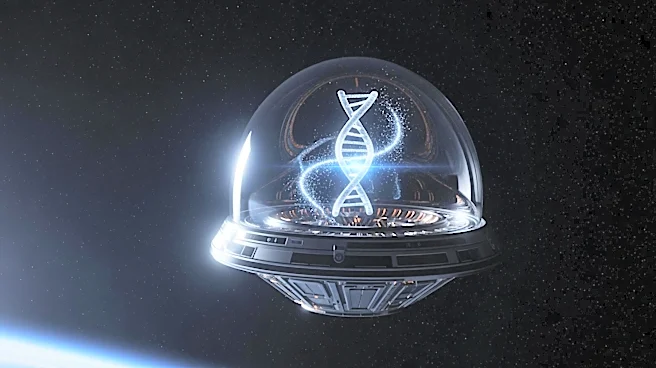
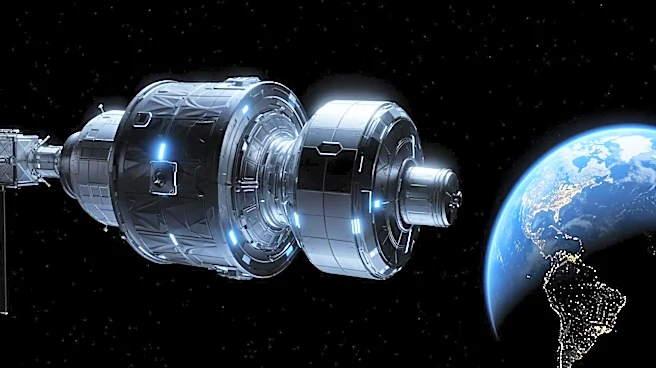
China has launched 'human artificial embryos' to the Tiangong space station to study the effects of microgravity and cosmic radiation on human reproduction. This mission, part of the Tianzhou-10 resupply mission, aims to understand the potential for human reproduction in space,
which is crucial for establishing self-sustaining colonies on the moon and Mars. The embryos, made from human stem cells, are designed to mimic early human development stages without developing into a fetus. The experiment involves two types of artificial embryos representing different embryonic phases. These embryos will grow for five days in space before being frozen and returned to Earth for analysis. The mission also delivered other scientific experiments and supplies to the space station.
Why It's Important?
The ability to reproduce in space is vital for long-term human habitation on other planets. Understanding how space conditions affect embryonic development can help address challenges in establishing permanent human settlements on the moon and Mars. The research could reveal how microgravity and radiation impact early human development, which is essential for future space missions. This experiment also highlights China's growing capabilities in space exploration and its interest in leading scientific research in space. The findings could influence future policies and strategies for space colonization and tourism, as well as international collaborations in space research.
What's Next?
The embryos will be analyzed upon their return to Earth to compare their development with control samples grown on Earth. This comparison aims to identify factors affecting embryonic growth in space. The results could inform future experiments and strategies for human reproduction in space. As space tourism becomes more mainstream, understanding these factors will be crucial for ensuring the safety and feasibility of human reproduction in space environments. The research may also lead to advancements in in vitro fertilization techniques for space applications, which are being explored by private space companies.
Beyond the Headlines
This experiment raises ethical questions about human reproduction in space and the potential implications for human evolution. The use of artificial embryos allows researchers to study early development stages with fewer ethical concerns, but the prospect of human reproduction in space could lead to debates about the rights and welfare of potential space-born humans. Additionally, the research could have implications for understanding human development on Earth, as it explores fundamental biological processes in a unique environment. The findings may also contribute to broader discussions about the future of human life beyond Earth.