






What's Happening?
Rep. Pat Fallon has introduced legislation aimed at cutting federal intelligence-related funding from universities that maintain ties to Chinese Communist Party (CCP)-linked groups. This move is driven by concerns over national security and the protection
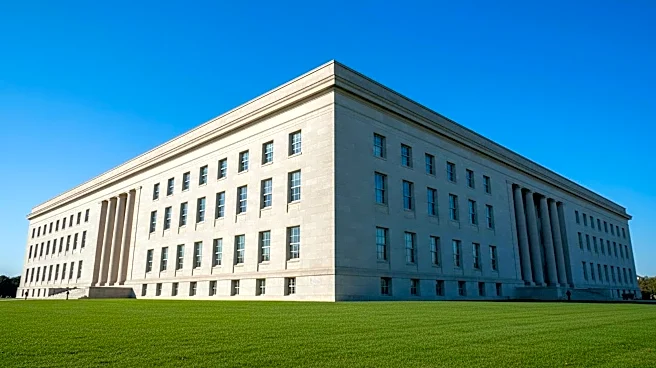
of sensitive U.S. research. The legislation follows a directive from the Pentagon, which on Monday ordered 30 American universities to conduct audits of their financial and research connections to foreign entities. These institutions, including Georgetown, MIT, Harvard, and NYU, risk losing federal research funding if they do not comply. The audits require universities to review identified foreign collaborations, assess any exposure of sensitive or export-controlled research, and implement plans to mitigate national security risks, potentially terminating problematic partnerships. The War Department has set an August 31 deadline for these institutions to report their findings. This initiative targets foreign entities listed under Section 1286 of the Fiscal Year 2019 National Defense Authorization Act, which identifies 130 academic and research institutions in China, Russia, and Iran involved in activities that could lead to the misappropriation of U.S. government-funded research and development.
Why It's Important?
This legislative effort and the Pentagon's audit directive are significant for U.S. national security and the integrity of American academic research. The measures aim to prevent foreign exploitation of sensitive U.S. intellectual property and technological advancements, particularly from countries like China, which has reportedly used outputs from U.S. artificial intelligence models to train its defense capabilities. Universities are critical partners in various War Department research programs, making the security of these investments paramount. The potential loss of federal funding could significantly impact the research capabilities and financial stability of major U.S. academic institutions. Furthermore, it underscores a broader governmental push to scrutinize and limit foreign influence within the U.S. education system, building on previous actions such as the closure of China-tied Confucius Institutes due to concerns over Beijing's influence. The legislation and audits highlight the ongoing tension between academic openness and national security imperatives, potentially reshaping how U.S. universities engage in international collaborations.
What's Next?
The 30 universities targeted by the Pentagon's directive must submit their audit findings to the War Department by August 31. Following this, the department will likely review these reports to determine compliance and identify any remaining national security risks. Universities found to have problematic partnerships or insufficient mitigation plans could face the termination of federal research funding. Rep. Pat Fallon's proposed legislation will proceed through the legislative process, potentially undergoing committee hearings and votes. Its passage would codify and expand the government's ability to cut funding to institutions with ties to CCP-linked groups, creating a more permanent framework for addressing these concerns. Major stakeholders, including university administrations, research faculty, and international student organizations, will be closely monitoring these developments, as the outcomes could necessitate significant changes in institutional policies regarding foreign collaborations and funding sources. The broader implications could also include increased scrutiny of international students and researchers from targeted countries.
Beyond the Headlines
Beyond the immediate financial and security implications, these actions raise deeper questions about academic freedom, international collaboration, and the global competitiveness of U.S. research. While the intent is to protect national security, there is a risk of fostering an environment of suspicion that could deter legitimate and beneficial international academic exchanges. The focus on CCP-linked groups also highlights the growing geopolitical competition between the U.S. and China, extending into the scientific and educational spheres. This could lead to a more insular research environment, potentially hindering the free flow of ideas that often drives innovation. The measures also prompt a re-evaluation of the balance between open scientific inquiry and the need for national defense, forcing universities to navigate a complex landscape where their traditional roles as centers of global knowledge exchange are increasingly challenged by geopolitical realities. The long-term impact could be a recalibration of U.S. higher education's engagement with foreign entities, prioritizing national interests over unfettered international partnerships.