
What's Happening?
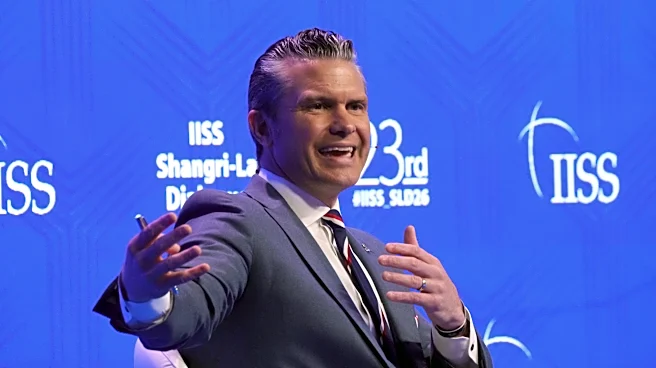
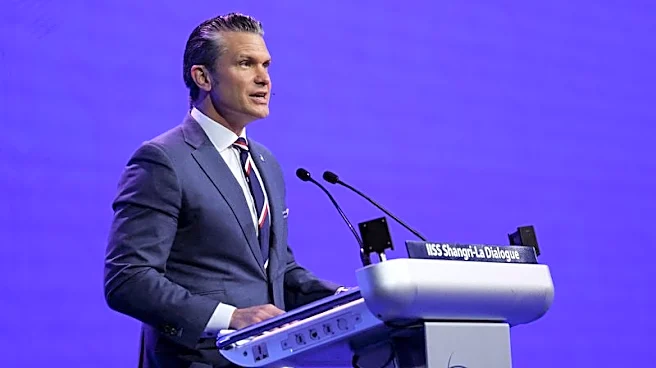
Defense Secretary Pete Hegseth has called for a 'quiet' approach to security cooperation in the Asia Pacific, following President Trump's recent visit to China. Speaking at the Shangri-La Dialogues in Singapore,
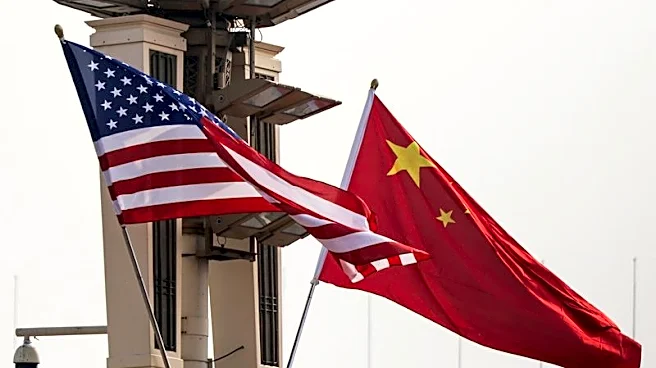
Hegseth emphasized improved U.S.-China relations, describing them as better than in recent years. This marks a shift from his previous hawkish stance on China, as he refrained from mentioning Taiwan, a contentious issue with Beijing. Hegseth's remarks come amid ongoing U.S. military engagements in Latin America and the Middle East, and reflect a strategic pivot towards more subdued diplomatic communications. The speech has drawn criticism from some U.S. lawmakers, who express concern over the perceived downgrading of the Indo-Pacific's importance in U.S. national security policy.
Why It's Important?
Hegseth's call for a 'quiet' defense strategy in Asia signifies a potential shift in U.S. foreign policy under President Trump, focusing on diplomatic engagement rather than confrontation with China. This approach could alter the dynamics of U.S.-China relations and impact regional security, especially concerning Taiwan and the South China Sea. The change in tone may reassure some Southeast Asian countries caught between U.S. and Chinese influence, reducing pressure to choose sides. However, it also raises concerns among U.S. allies about the reliability of American security commitments, particularly as China continues its military buildup in the region. The strategic recalibration could have long-term implications for U.S. influence and alliances in the Asia Pacific.
What's Next?
The U.S. is likely to continue balancing its diplomatic and military strategies in Asia, with potential adjustments based on regional developments and domestic political considerations. The response from Asian allies and China will be crucial in shaping future U.S. actions. Increased dialogue and cooperation with China could lead to new agreements or initiatives, while maintaining military readiness in the region remains a priority. The evolving geopolitical landscape will require careful navigation to ensure stability and protect U.S. interests.