


What's Happening?
The United States is urging European nations to assume greater responsibility for their own defense capabilities, a significant shift from the longstanding U.S.-led security arrangements established post-World War II. This push is part of a broader strategy
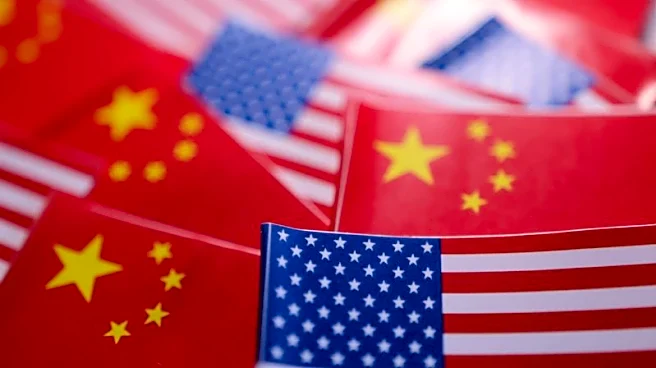
to have Europe take on the bulk of NATO defense responsibilities by 2027. The move is seen as a response to the evolving geopolitical landscape, particularly with the rise of threats from Russia and China. European leaders, however, express concerns about the feasibility of such a rapid transition, citing the deeply ingrained dependency on U.S. military support. The European Union has responded with initiatives like the 'White Paper for European Defence – Readiness 2030,' which calls for increased defense spending and a revitalization of the continent's defense industrial base. Despite these efforts, the transition to self-reliance is progressing slower than the U.S. desires, with challenges in military readiness and industrial capacity.
Why It's Important?
This development is crucial as it marks a potential realignment of global military power dynamics. For the U.S., reducing its military commitments in Europe could allow for a reallocation of resources to other strategic areas, such as the Indo-Pacific region. For Europe, achieving defense self-reliance is essential to countering threats from Russia and China independently. However, the transition poses significant challenges, including the need for substantial investment in military infrastructure and personnel. The success or failure of this initiative could impact NATO's future effectiveness and the overall security architecture of Europe. Additionally, the shift could influence U.S.-Europe relations, as European nations may seek to assert more autonomy in their defense policies.
What's Next?
The next steps involve European countries implementing the strategies outlined in the 'White Paper for European Defence – Readiness 2030,' including increasing defense budgets and enhancing military capabilities. The EU's Security Action for Europe loan program aims to support these efforts financially. However, achieving the desired level of self-reliance by 2027 remains a daunting task. European nations will need to address industrial and manpower challenges, such as the fragmentation of the defense industry and personnel shortages. The U.S. may continue to pressure Europe to meet these goals, potentially leading to tensions if progress is deemed insufficient. The outcome of these efforts will likely shape the future of transatlantic security cooperation.
Beyond the Headlines
The push for European defense self-reliance raises broader questions about the future of NATO and the transatlantic alliance. As Europe seeks to reduce its dependency on U.S. military support, there may be shifts in how defense responsibilities are shared among member states. This could lead to a more balanced partnership, but also risks creating divisions if some countries are unable or unwilling to meet the new expectations. Additionally, the focus on self-reliance may drive innovation and growth in Europe's defense industry, potentially reducing reliance on U.S. technology. However, the transition also poses ethical and political challenges, as nations balance national security needs with broader geopolitical considerations.