
What's Happening?
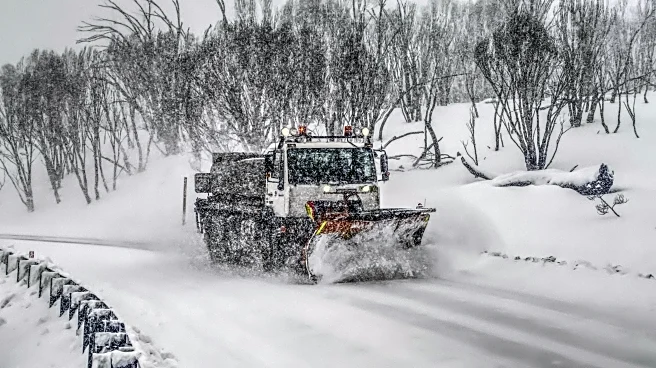
A powerful winter storm, known as a bomb cyclone, has developed off the East Coast, causing snow and severe cold alerts across several states. The storm is characterized by a rapid drop in central pressure,
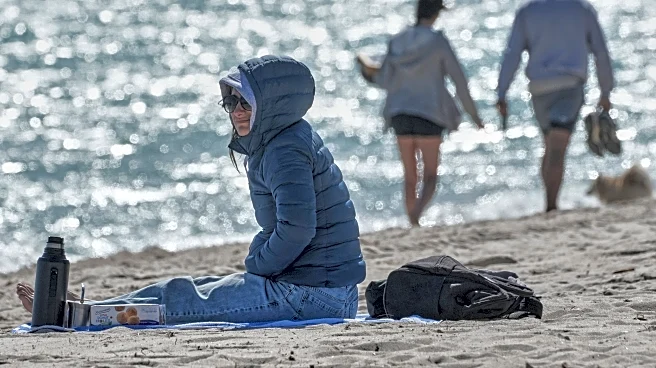
leading to damaging winds, heavy snow, and coastal flooding. The National Weather Service has issued extreme cold warnings, with temperatures expected to drop significantly, reaching as far south as Florida. This marks the coldest temperatures in southern Florida since December 1989. The storm has already brought over a foot of snow to areas in North Carolina and is expected to continue affecting the East Coast with blizzard conditions.
Why It's Important?
The bomb cyclone's impact on the U.S. highlights the increasing frequency and intensity of extreme weather events, which are often linked to climate change. The severe cold poses risks to public safety, with potential for frostbite and hypothermia. The economic impact is also significant, with disruptions to transportation and potential damage to infrastructure. The event underscores the need for preparedness and resilience in the face of extreme weather, as well as the importance of understanding the underlying climate mechanisms driving such events.
What's Next?
As the storm moves further into the Atlantic, winds along the East Coast are expected to ease. However, the cold air will persist, and authorities are urging residents to take precautions against the extreme temperatures. The National Weather Service continues to monitor the situation and provide updates. The event may prompt discussions on climate adaptation strategies and the need for robust infrastructure to withstand such extreme weather conditions.