




What's Happening?
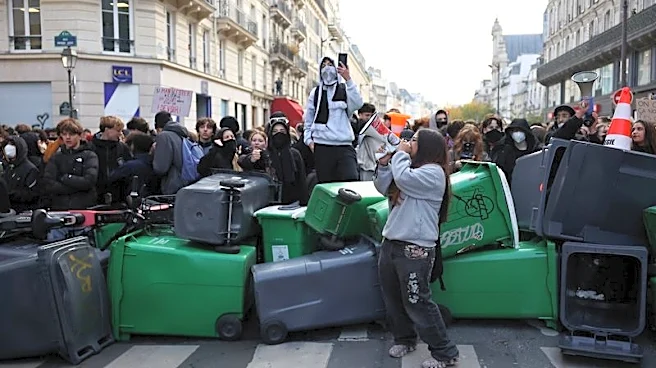
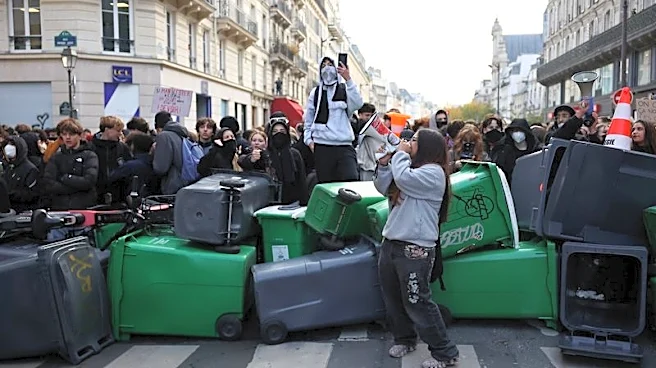
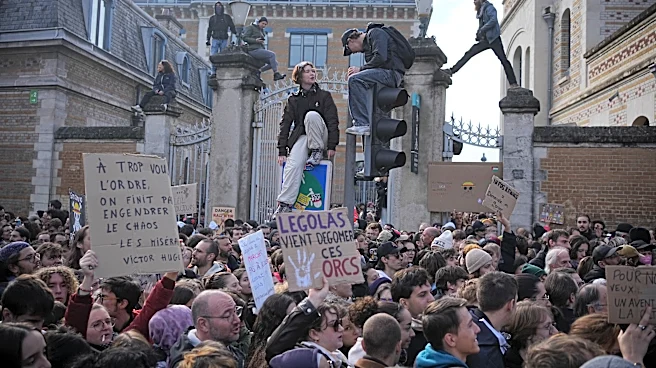
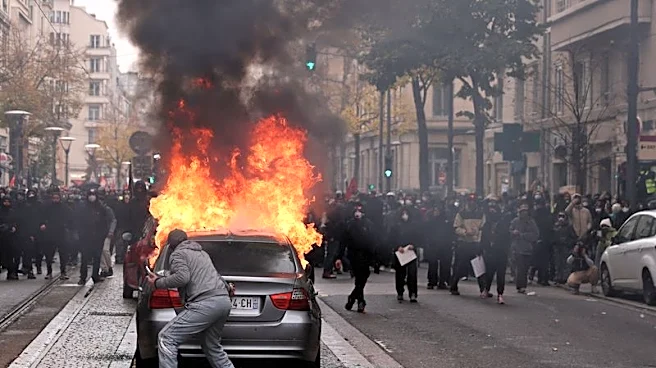
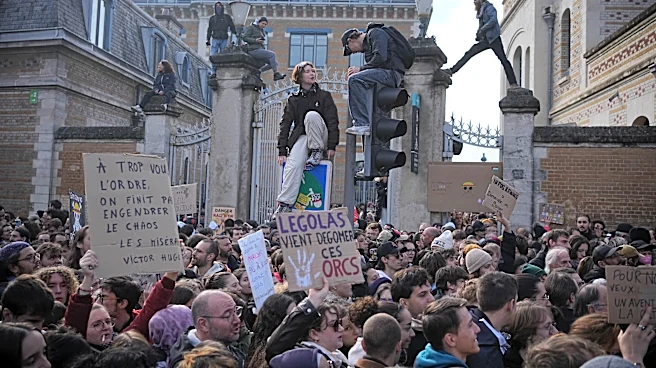
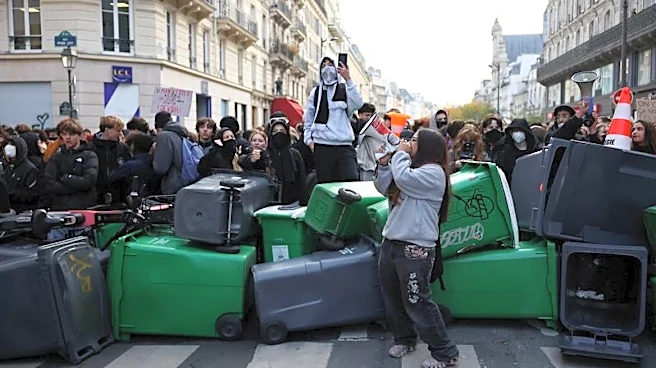
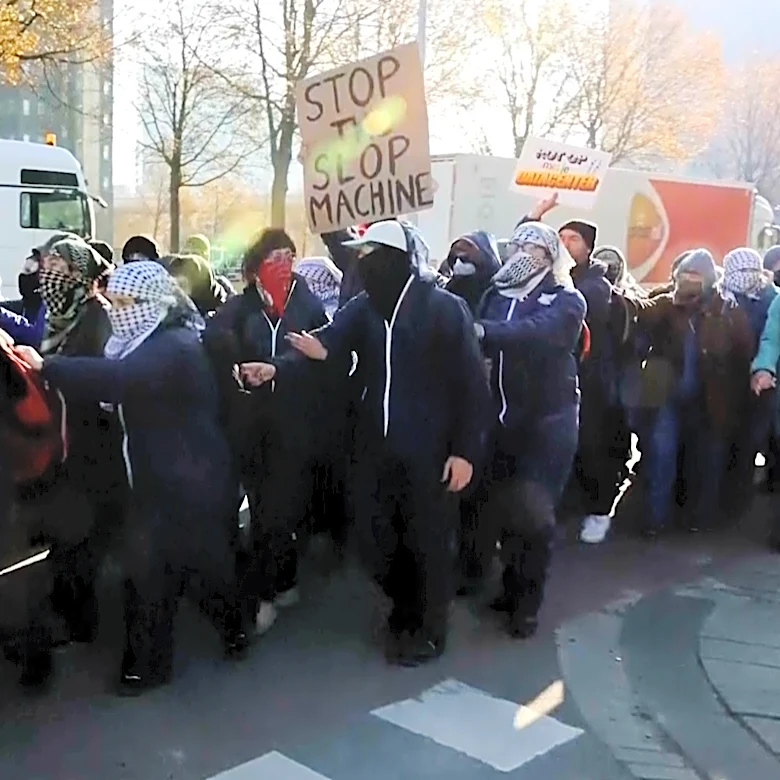
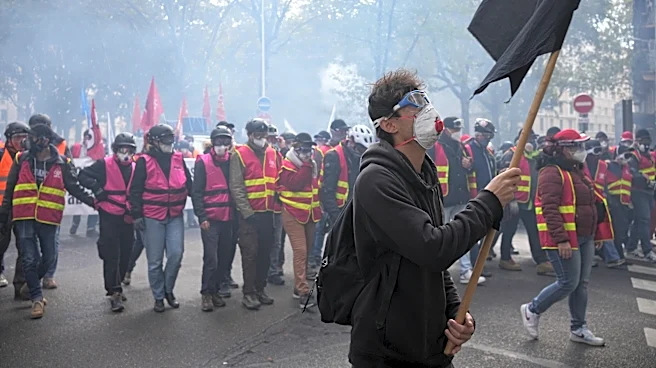
Workers and students across France have engaged in widespread protests and strikes, with organizers reporting 1.6 million participants nationwide, including 350,000 in Paris. The demonstrations are a response to President Macron's policies, with striking
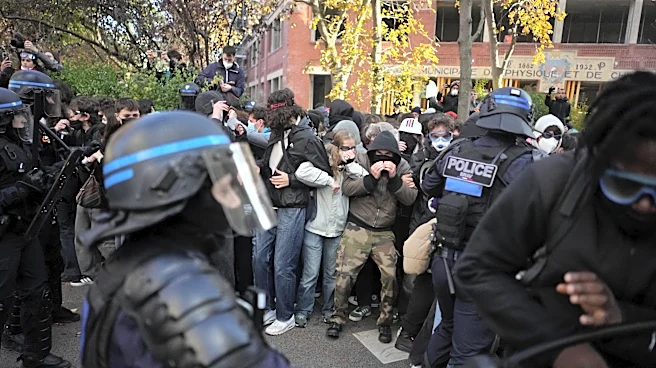
rail worker Guillaume noting that wages have not kept pace with inflation and energy prices have doubled in 15 years. The movement, which began with school students blockading secondary schools, has seen participation from various sectors including rail workers, hospital staff, dock workers, firefighters, and museum employees. Protesters are expressing discontent over low wages, high energy costs, and perceived government unresponsiveness, with many feeling that there is insufficient support for workers and that police are overly aggressive with young people.
Why It's Important?
The widespread protests in France highlight significant social and economic tensions within the country, reflecting a broader European trend of public dissatisfaction with economic conditions and government policies. The involvement of diverse worker groups, from train drivers to firefighters and museum staff, alongside students, indicates a broad-based opposition to the current administration's approach. This level of social unrest can disrupt public services and economic activity, potentially impacting supply chains and international business operations if prolonged. The sentiment that the government does not listen to its people, coupled with concerns over police actions, underscores a potential for escalating civil disobedience and political instability, which could influence investor confidence and international relations.
What's Next?
The movement is expected to continue, with striking rail worker Guillaume stating, "After today I think this movement will continue. The government doesn’t listen to the people and the police are very tough with young people. When they hit young people I think it’s time to strike." CGT union federation leader Sophie Binet has also pledged to escalate the movement. This suggests that further strikes and demonstrations are likely, potentially leading to continued disruptions in public transport and other sectors. The ongoing protests could pressure the French government to reconsider its policies on wages, energy prices, and public services, or face sustained public opposition and potential political ramifications.
Beyond the Headlines
The protests in France reveal deeper societal issues beyond immediate economic grievances, touching upon the perceived erosion of worker rights and the growing disparity between corporate profits and employee compensation. The sentiment that "There is a lot of money for shareholders and nothing for salaries" points to a fundamental critique of contemporary capitalism and wealth distribution. The involvement of students from the outset, and their aggressive treatment by police, also raises questions about civil liberties and the state's response to dissent. This movement could serve as a case study for other nations grappling with similar economic pressures and social inequalities, potentially inspiring or informing labor and student movements globally.