


What's Happening?
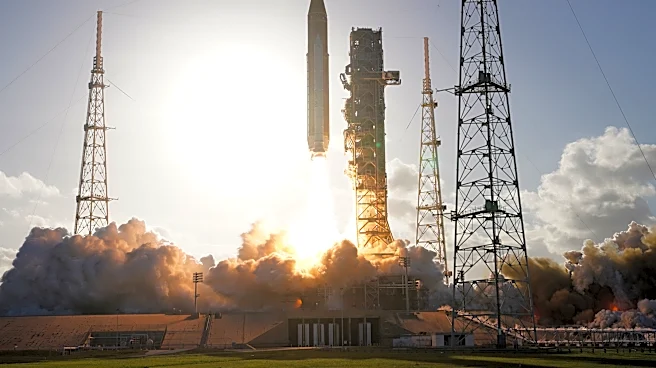
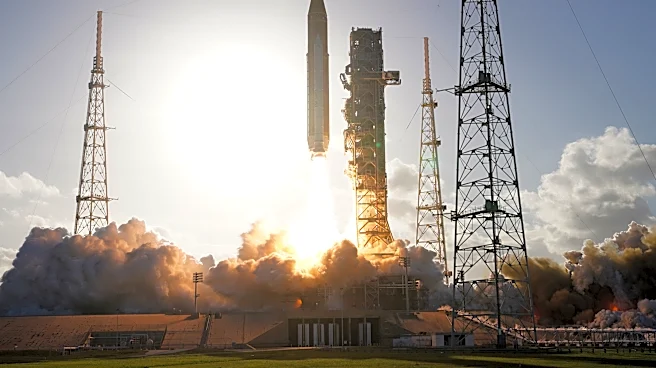
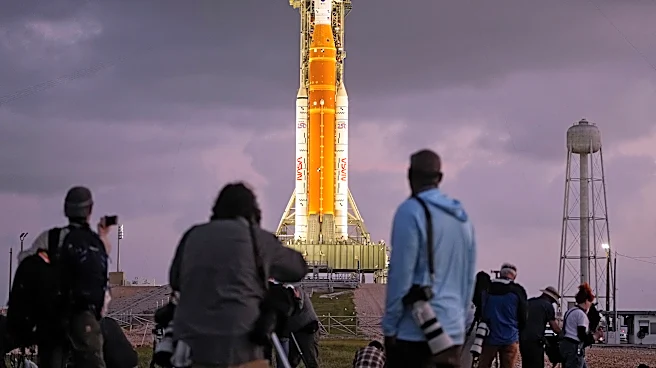
NASA has successfully launched the Artemis II mission, sending astronauts to the moon for the first time in over 50 years. The Space Launch System rocket took off from Kennedy Space Center, marking the beginning of a 10-day mission. The crew will perform
a flyby of the moon, testing critical systems and procedures for future lunar landings. This mission includes studies on the effects of deep-space travel on human health and aims to set the stage for a planned lunar landing in 2028. The crew includes Victor Glover, Christina Koch, Jeremy Hansen, and Reid Wiseman, each marking significant milestones in space exploration.
Why It's Important?
The Artemis II mission represents a significant step forward in NASA's efforts to return humans to the moon and eventually establish a sustainable presence there. This mission is crucial for testing new technologies and procedures that will be essential for future lunar and Mars missions. The involvement of international partners, such as the Canadian Space Agency, highlights the collaborative nature of modern space exploration. The mission also serves as an inspiration for future generations, showcasing the potential for scientific discovery and innovation in space travel.
What's Next?
Following the successful completion of Artemis II, NASA plans to continue with the Artemis program, aiming for a lunar landing by 2028. The next steps include the Artemis III mission, which will test docking procedures with lunar landers, and Artemis IV, which aims to land humans on the moon. These missions will further NASA's goal of establishing a lunar base and preparing for future missions to Mars. The success of Artemis II will provide valuable data and experience to inform these upcoming missions.