






What's Happening?
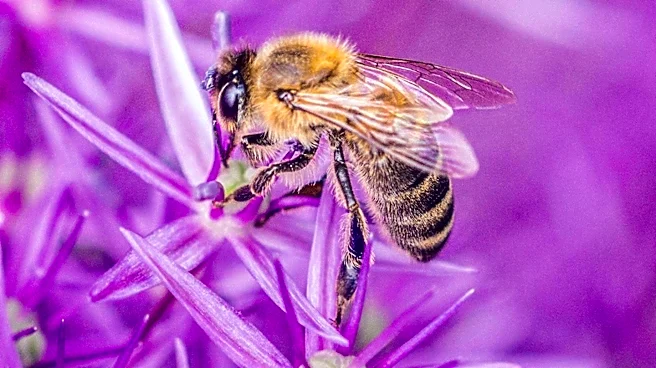
New research led by Washington State University, in collaboration with agricultural technology company H4Bees, has found that a special bee feed supplement can significantly increase honey bee colony populations. The study, published in the scientific
journal Entomological Communications, focused on honey bee colonies used for blueberry pollination. Researchers tested a powdered supplement called Nano-B-Feed™, which is placed at the entrance of beehives, allowing bees to consume it without requiring beekeepers to open the hive. Results showed that colonies receiving the supplement experienced a notable increase in bee population compared to untreated colonies, indicating stronger colony health and improved pollination potential. This development is particularly important given recent reports of unexpected colony losses among beekeepers after pollinating blueberry fields, which has made some hesitant to provide colonies for this crucial agricultural activity.
Why It's Important?
This research holds significant importance for U.S. agriculture and food security, as honey bees are vital pollinators for many fruit and vegetable crops, including blueberries. Healthy and robust bee colonies are essential for ensuring high-quality yields and maintaining crop production. The observed increase in bee population due to the supplement could help mitigate colony losses, providing a more reliable and efficient pollination force for farmers. This is especially critical for commercial blueberry farms that heavily rely on managed honey bee colonies. By supporting bee health, this innovation can contribute to more stable crop yields, better berry quality, and a more secure food supply. The ease of application of the supplement also benefits beekeepers by reducing disturbance to colonies and improving safety, potentially encouraging more participation in pollination services.
What's Next?
Researchers plan to expand their work in future growing seasons by conducting larger studies and involving more honey bee specialists to better understand how the supplement works across different agricultural systems. While additional research is needed, scientists believe the supplement may help bees manage exposure to pesticide and fungicide residues encountered during foraging. The product, developed by H4Bees, is already being used commercially on various crops globally, including apples, cherries, almonds, kiwifruit, plums, onions, cotton, and blueberries. Continued research and broader adoption of such supplements could play a crucial role in strengthening pollinator health and ensuring the future of farming, especially as interest in pollinator health continues to grow worldwide.
Beyond the Headlines
This innovation touches upon several deeper implications beyond immediate agricultural benefits. It highlights the ongoing challenge of balancing agricultural productivity with environmental sustainability, particularly concerning pesticide use and pollinator health. The development of a bee feed supplement that strengthens colonies offers a proactive approach to mitigating the negative impacts of agricultural chemicals, rather than solely relying on restrictions. Ethically, it underscores the responsibility to protect essential biodiversity, like pollinators, for ecological balance and human well-being. Culturally, there's a growing awareness and appreciation for the role of bees, which could foster greater support for research and products that promote their health. This research also exemplifies the value of international collaborations in addressing global food production challenges, as the product's development began in Israel and involves researchers from different regions.