






What's Happening?
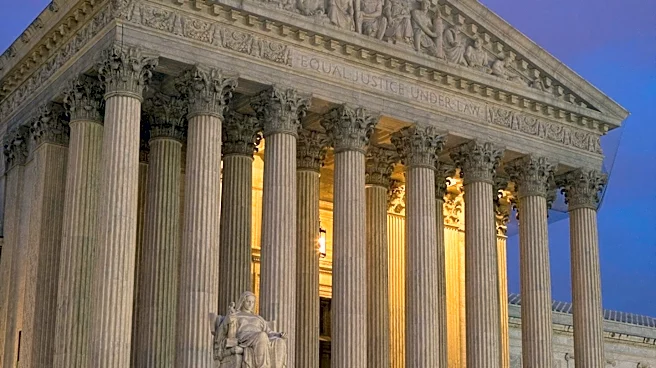
In a recent podcast episode, New York Times columnist Jamelle Bouie joined hosts Dahlia Lithwick and Mark Joseph Stern to discuss the concept of popular constitutionalism and the role of the Supreme Court in shaping constitutional understanding. Bouie,
known for his ability to apply historical context to modern events, provided insights into the Supreme Court's current monopoly on constitutional interpretation and its gradual professionalization. He shared his thoughts on potential structural reforms for the high court and emphasized the need to reclaim the Framers' vision of a constitution by the people. The discussion is part of Slate's series on reclaiming constitutional power for every American, encouraging listeners to consider how they can assert ownership of the Constitution in their own lives and communities.
Why It's Important?
The conversation highlights the ongoing debate about the Supreme Court's influence over constitutional interpretation and the potential for reform. Bouie's insights are significant as they address the broader implications of the Court's decisions on American democracy and individual freedoms. By advocating for popular constitutionalism, the discussion underscores the importance of public engagement in constitutional matters, suggesting that ordinary Americans have a role in shaping constitutional meaning beyond the Court's rulings. This perspective could influence public discourse and policy-making, potentially leading to reforms that democratize constitutional interpretation and enhance civic participation.
What's Next?
The podcast episode encourages listeners to reflect on their role in constitutional interpretation and to engage in discussions about expanding fundamental freedoms. Slate's series aims to inspire public involvement in constitutional matters, potentially leading to increased advocacy for Supreme Court reform. As the conversation around the Court's role continues, stakeholders, including legal scholars, policymakers, and the public, may push for changes that align with the vision of a constitution by the people. Future discussions and events, such as the special Amicus event in September, may further explore these themes and their implications for American democracy.
Beyond the Headlines
The discussion on popular constitutionalism and Supreme Court reform touches on deeper issues of democratic governance and the balance of power. It raises questions about the legitimacy of the Court's authority and the potential for a more participatory approach to constitutional interpretation. This could lead to a cultural shift in how Americans perceive their role in shaping constitutional norms, fostering a more engaged and informed citizenry. The conversation also highlights the ethical dimensions of judicial power and the need for transparency and accountability in the Court's decision-making processes.