









What's Happening?
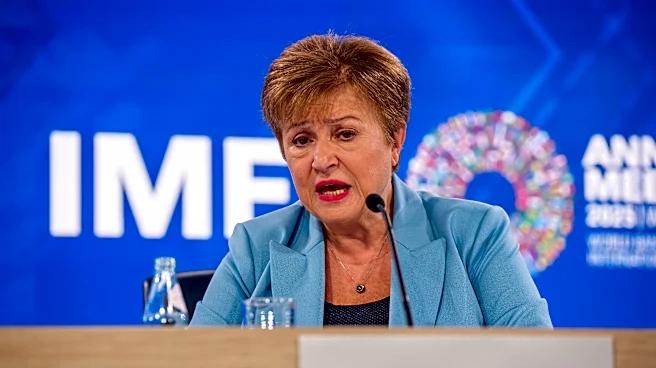
The International Monetary Fund (IMF) held a book launch event in Bangkok on October 12, 2026, for its flagship publication, 'Shaping the Future of Asia: Opportunities and Challenges.' The event, part of the 2026 IMF–World Bank Annual Meetings, brought
together leading policymakers and economists to discuss critical factors influencing Asia's economic trajectory. Key topics included demographic shifts, geoeconomic fragmentation, technological transformation, and the energy transition. Kristalina Georgieva, IMF Managing Director, delivered opening remarks, and Krishna Srinivasan, Director of the IMF’s Asia and Pacific Department, presented the publication. Panelists included Nigel Clarke, IMF Deputy Managing Director; Changyong Rhee, former Governor of the Bank of Korea; Veerathai Santiprabhob, former Governor of the Bank of Thailand; and V. Anantha Nageswaran, Chief Economic Advisor to the Government of India. Jing Qian, Vice President of Asia Society and Managing Director of its Center for China Analysis, moderated the discussion.
Why It's Important?
This event is significant as it highlights the IMF's focus on the economic future of Asia, a region with substantial global economic influence. The discussions on demographic shifts, technological transformation, and energy transition are crucial for understanding potential impacts on global supply chains, investment flows, and international trade, which directly affect U.S. businesses and economic interests. Geoeconomic fragmentation, another key topic, could lead to shifts in global alliances and trade policies, potentially altering market access and competitive landscapes for American companies. The insights shared by these prominent economists and policymakers can inform U.S. foreign policy and economic strategies, helping to anticipate and respond to changes in one of the world's most dynamic economic regions. Understanding these trends is vital for U.S. stakeholders to navigate future economic challenges and opportunities.
What's Next?
The insights and recommendations from the 'Shaping the Future of Asia' publication and the associated discussions are likely to inform future IMF policy advice and engagement with Asian economies. These discussions could influence national economic policies within Asian countries, potentially leading to new regulations, investment incentives, or trade agreements that could impact U.S. businesses operating in or trading with the region. The IMF's ongoing analysis of global economic trends, including those in Asia, will continue to be a key reference for international financial institutions and governments. Future IMF–World Bank Annual Meetings will likely build upon these discussions, further refining strategies for sustainable growth and stability in Asia and globally. The IMF may also continue to publish follow-up reports and analyses based on the themes explored at this event.
Beyond the Headlines
The focus on 'Shaping the Future of Asia' extends beyond immediate economic forecasts, delving into long-term structural changes that will redefine the region's role in the global economy. The emphasis on technological transformation underscores the accelerating pace of innovation and its potential to create new industries while disrupting existing ones, posing both opportunities and challenges for U.S. tech companies and labor markets. The discussion on energy transition highlights the growing global commitment to sustainability, which could drive demand for green technologies and investments, influencing U.S. energy policy and corporate strategies. Furthermore, the concept of geoeconomic fragmentation suggests a potential shift away from a fully integrated global economy, which could lead to more regionalized trade blocs and supply chains, requiring U.S. businesses to adapt their international operations and risk management strategies. These deeper implications point to a future where economic resilience and adaptability will be paramount.